Last updated November 22, 2026
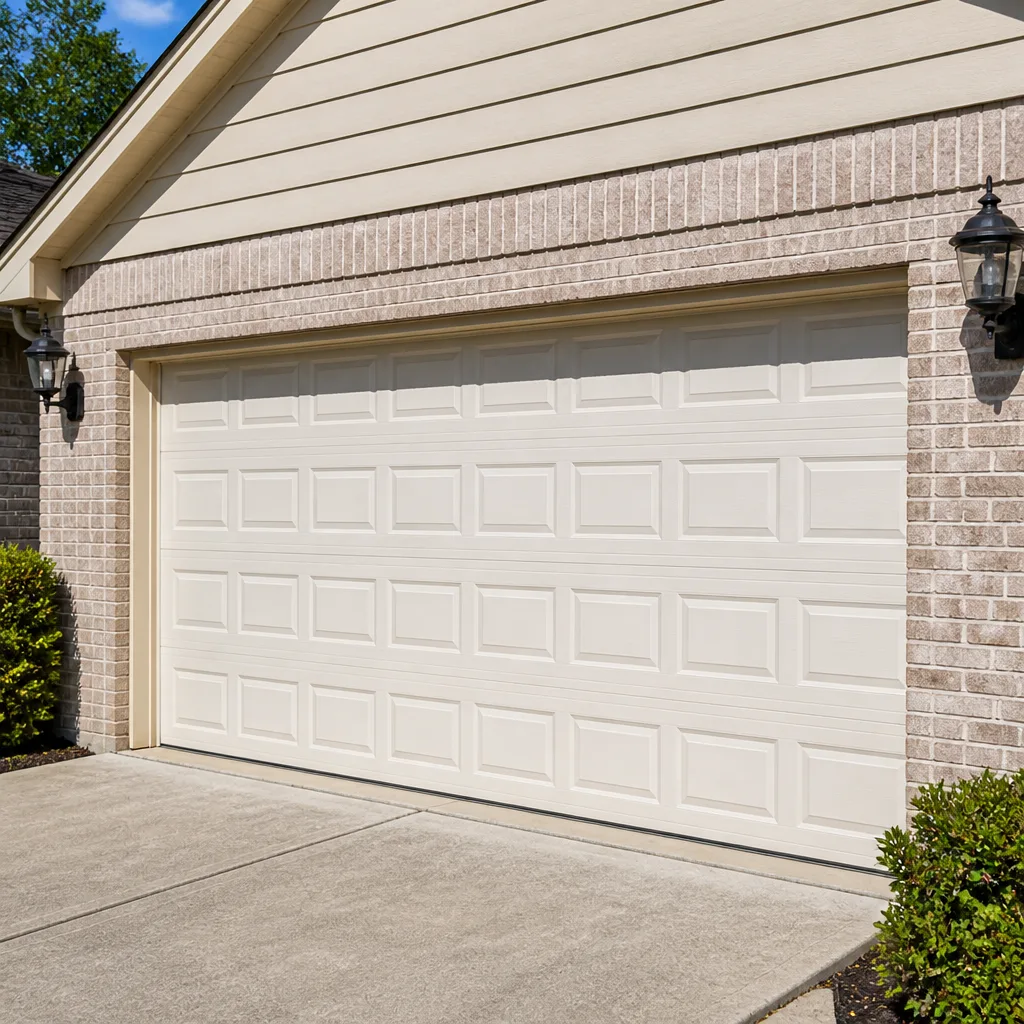 Raised-panel steel
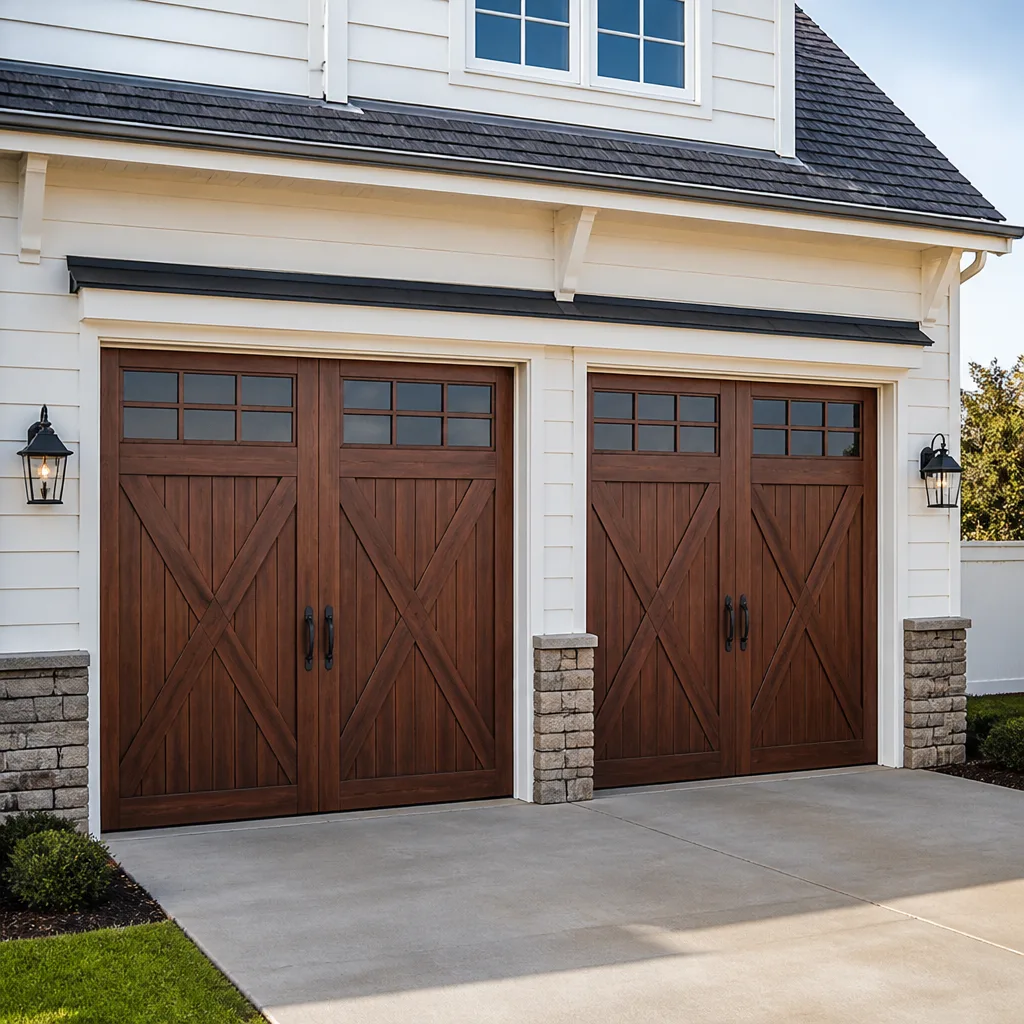 Carriage house
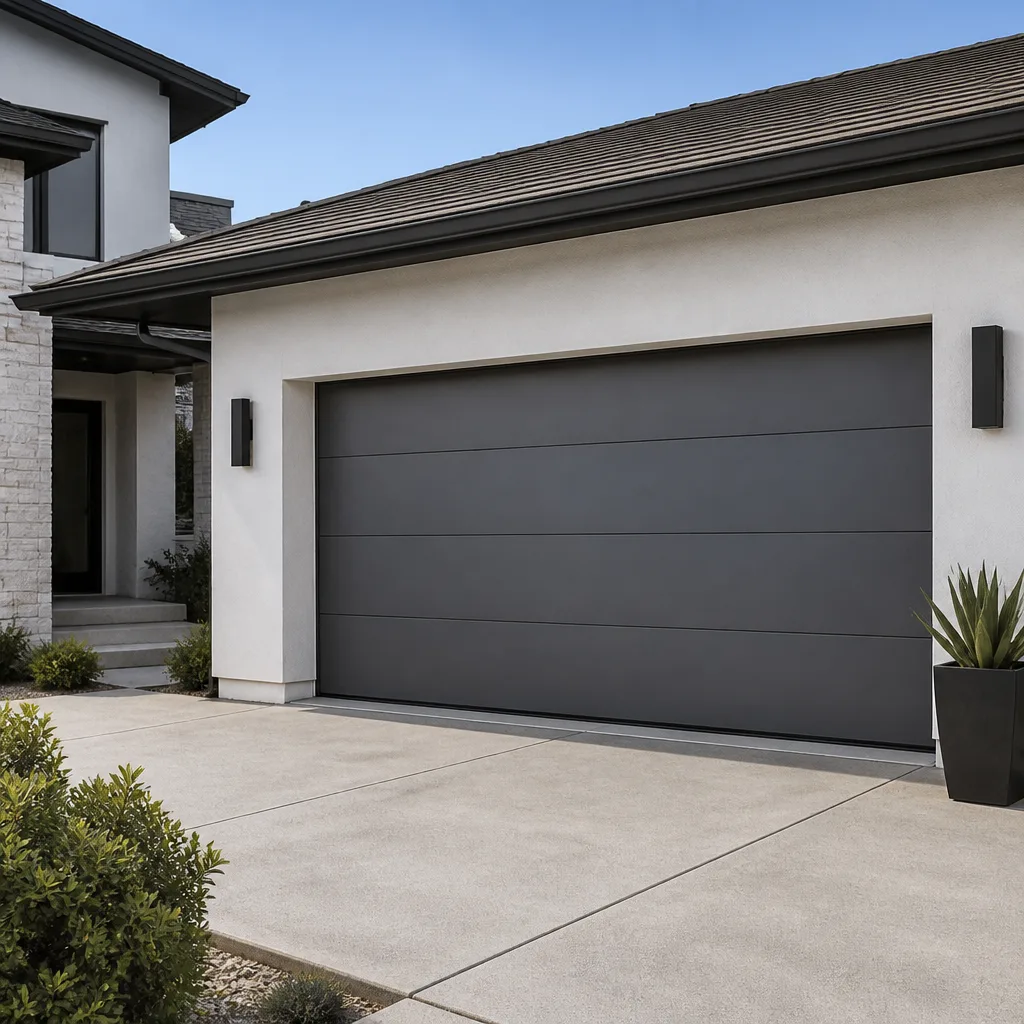 Modern flush
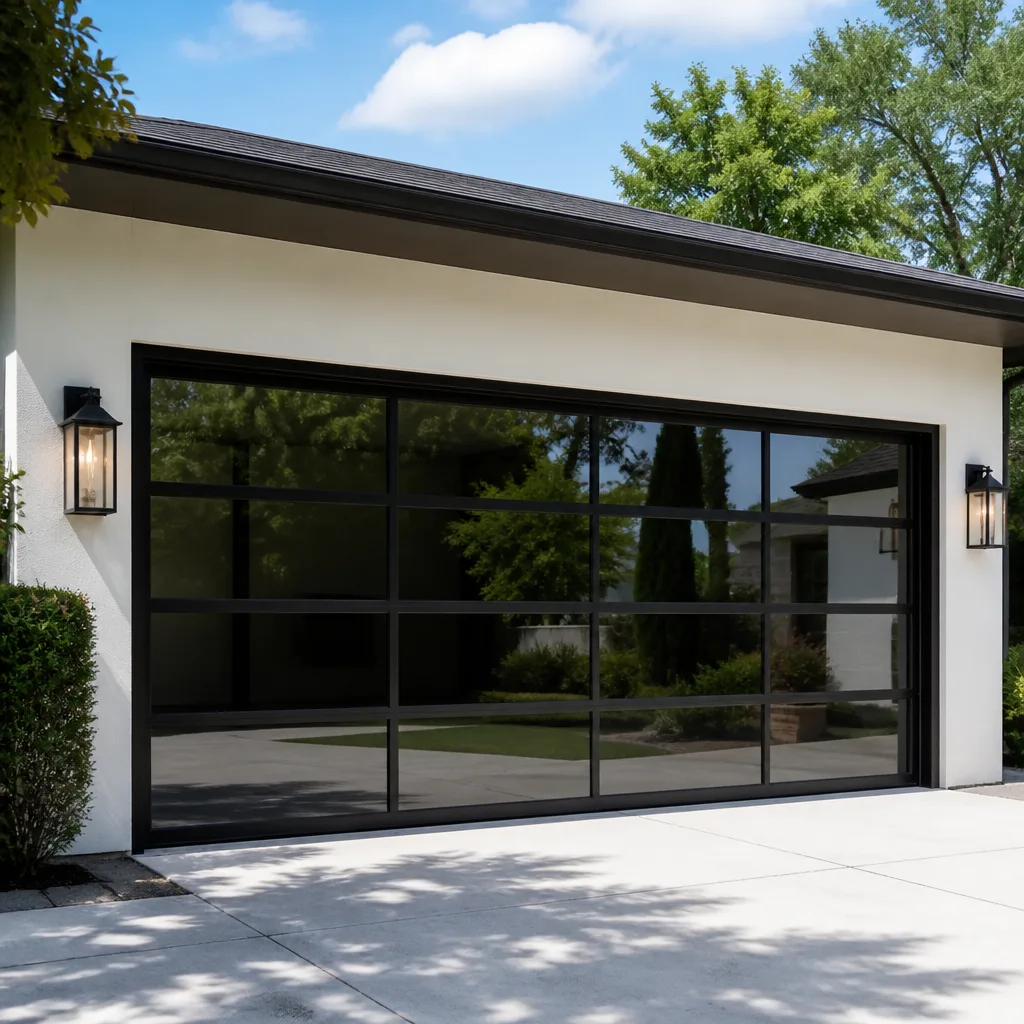 Full-view glass
 LiftMaster openers
 Chamberlain openers
Full 25-point door and opener safety check with every visit - springs, cables, rollers, tracks, and your LiftMaster or Chamberlain opener included
You get a price before we start. It does not change when the pro arrives.
Get your free estimateGarage Door Emergency Preparedness Guide for New Britain Homes
When a torsion spring snaps at 11pm in February and your car is stuck inside, you have three decisions to make in the next five minutes: manual release or call for service, secure the door or leave it, and who to call. Most homeowners make at least one of those wrong because they’ve never thought it through in advance. The reason isn’t carelessness. It’s that nobody hands you a plan when you buy a house with a garage door. You learn by standing in a cold garage in the dark, phone in one hand, pulling a red cord with the other. This guide walks through the decisions before you have to make them. You’ll learn how the manual release actually behaves under spring tension, how to hold an open door against New Britain weather, what to say when you call a technician so they arrive with the right parts, and how to build a reference card you can post on the wall.
Quick Answer
A garage door emergency in New Britain is resolved in three steps: make the door safe (release the carriage only if the door isn’t under spring tension, or brace it if it is), secure the opening against weather and entry, then call a specialist with your door’s brand, model, and symptom so they bring the right parts. A snapped spring, a door stuck open, or an opener that won’t lift are all repairable problems. None of them require you to force the door.
Styles & brands we work with
- Raised-panel steel
- Carriage house
- Modern flush
- Full-view glass
- LiftMaster openers
- Chamberlain openers
Table of Contents
- The Five-Minute Decisions Before You Call Anyone
- How the Manual Release Works (And When to Leave It Alone)
- How to Temporarily Secure a Door Stuck Open
- What to Tell a Technician on an Emergency Call
- The Power-Outage Scenario: Getting the Car Out
- How New Britain Weather and Housing Shape the Risk
- Building Your One-Page Emergency Reference Card
- Preventive Checks That Stop Most Emergencies
The Five-Minute Decisions Before You Call Anyone
Most garage door emergencies are decided in the first five minutes, and the decision tree is narrower than people expect. Your first question is whether the door is under spring tension at the moment it failed. A door that failed in the closed position with a snapped spring is under tension. A door whose opener burned out while the door was down is not. That single difference determines whether you touch the release cord at all.
Here’s how the three decisions break down:
- Release or don’t release. If the door is fully closed and the spring is visibly snapped (a gap in the coil, a broken winding), leave the carriage alone. The door is holding itself down. If the opener failed with the door down and the springs are intact, the manual release is safe to use.
- Secure or leave it. A door stuck open is an opening in your house. You secure it against wind, rain, and entry with the steps in the next sections. A door stuck closed is inconvenient but not urgent in the same way, unless the car is trapped.
- Who to call. Call a garage door specialist who works on your brand rather than a generalist. A handyman may not carry torsion springs for a Raynor or a LiftMaster, and you’ll have paid for a visit that turns into a reschedule.
We’ve walked into plenty of New Britain garages where the homeowner did the hardest part right (didn’t force the door) and the easiest part wrong (didn’t have the brand model written down). Both matter. The brand and model are on a sticker on the inside of the door panel or on the opener housing, and a photo of that sticker saves everyone time on the phone.
How the Manual Release Works (And When to Leave It Alone)
The manual release cord disconnects the door from the opener’s carriage, not from the springs. This is the part most preparedness guides skip. The cord is not an emergency brake and it is not a way to make the door lighter. It separates the door from the trolley so you can lift it by hand. If the springs are intact, lifting by hand is manageable. If a spring is snapped, the door is dead weight, and pulling that cord while the door is down under remaining tension can let the door drop or swing uncontrolled.
Inside the trade, the manual release cord is treated as a machine, not a convenience. Here’s how to think about it before you pull:
- Is the door fully open and resting on its tracks? Safe to release. The door is already up, and the opener isn’t holding it against gravity.
- Is the door fully closed with intact springs? Safe to release if you plan to lift by hand and you have a helper. Lift with your legs and control the descent.
- Is the door closed with a snapped spring? Do not release. The door is under tension from the intact spring or springs and the broken one is no longer sharing the load.
- Is the door partially open and hanging? Do not release. Prop it, back away, and call for service. A partially open door with a snapped cable can fall.
Garage door springs are the genuinely dangerous component of this trade. A torsion spring under load carries enough energy to injure anyone standing near it when it lets go, and a wound extension spring can whip. There is no safe homeowner procedure for replacing or adjusting them. Our advice is always the same: if the spring is part of the problem, hand the job to a technician and don’t try to raise the door manually to prove you can. For the technical side of that repair, see our guide to garage door spring repair.
One more thing worth knowing: the cord can get tangled or the handle can break on an older door. If the release doesn’t move cleanly, stop pulling. A jammed release often means the carriage is under load, which usually traces back to a spring or a track problem.
How to Temporarily Secure a Door Stuck Open
A door stuck open in a snowstorm or a spring thunderstorm is a weather and security problem before it’s a repair problem. You don’t need special hardware to hold it. Most New Britain homes have what’s needed already, because the goal is to stop movement and close the opening, not to make the door operational.
Here’s the order we’d suggest:
- Stop the movement first. Wedge a couple of pieces of lumber or plastic shims under the bottom edge of the door on each side. This keeps the door from dropping or slamming if the opener or spring gives way further.
- Brace the door against wind. A 2×4 cut to fit under the bottom panel, angled from the ground to the door’s inner frame, holds the door in place. Two braces, one per side, is better than one in the middle.
- Close the opening behind the brace. A sheet of plywood, a large plastic tarp, or a heavy moving blanket tacked to the interior frame blocks wind-driven rain and snow from getting into the garage. Tape the bottom edge to the floor with a strip of duct tape or a rolled towel to keep water from running under.
- Secure the perimeter for the night. Anyone can walk through an open garage and into a house. If the door is going to stay open overnight while you wait for service, move anything valuable out of the garage, lock the interior door, and let a neighbor know if you’re comfortable doing so.
- Don’t force the door down. A door that won’t close is telling you something (track damage, a broken spring, or a misaligned sensor), and forcing it down bends panels and turns a repair into a replacement.
If the door operates but won’t close because the opener reverses on the way down, that’s often a photo-eye safety sensor problem rather than the door itself. Check that the two small lenses near the bottom of the tracks are facing each other and not blocked by a snowbank, a trash can, or a dropped leaf. Our garage door opener repair page covers the reversal and sensor troubleshooting in more detail.
For the door-in-the-down-position emergencies (car trapped inside, door won’t lift), the opposite priority applies. You want to get the door up safely so the car can leave, then leave the door up until a technician arrives rather than cycling it repeatedly.
What to Tell a Technician on an Emergency Call
The quality of the emergency call determines the quality of the visit. A technician who knows the brand, the symptom, and the door’s weight class before they arrive can load the right spring, the right opener part, or the right bracket. A vague call (“my door doesn’t work”) almost always means a second visit.
Here’s what we want to know, in order:
- What happened, in seconds. “Heard a bang from the garage and the door won’t lift” is different from “the door opened halfway and stopped.” The first points to a spring. The second points to an opener, a track, or a cable.
- Where the door is sitting. Fully open, fully closed, or partially open. Partially open is the case where we hurry, because the door is more likely to move.
- Brand and model. On the door itself, on the inside of a panel, and on the opener. Photo the labels. This is why we note the eight brands we work on: LiftMaster, Chamberlain, Genie, Clopay, Amarr, Wayne Dalton, Craftsman, and Raynor. If your brand is on that list, the technician likely has the parts in mind before they leave.
- Door type and size. Single-car or double-car, wood, steel, or composite. A steel double door with an intact spring is a different job than a wood single door with a broken one.
- Access and safety details. Is the car parked inside the door’s path? Is the garage attached? Is the door accessible from a driveway, or is there a gate or a steep grade? The technician needs to know before they decide what to bring.
- Whether you’ve released the door. If the carriage is disconnected and the door is hanging, say so. That changes the safety plan on arrival.
Ask for a window, not a promise. A good dispatch will give you a realistic window and call if it changes. Emergency service is about prioritizing the door that can’t wait, and it helps if you tell them whether the door is a safety risk (open to the street) or just an inconvenience (stuck closed with the car outside).
The Power-Outage Scenario: Getting the Car Out
Power outages in New Britain are usually short, but they can last a day or more in a winter storm. The good news is that every opener that lifts a door has a manual release for exactly this. The specific steps vary a little with the drive type, and knowing yours before the outage matters.
Here’s the sequence:
- Find the release handle. It’s a cord with a handle, hanging from the carriage that rides the opener rail. If it’s tied short or knotted, untie it (with the door closed and springs intact) so it reaches a comfortable height.
- Stand clear of the door and pull down and back. The release disconnects the carriage from the trolley. You’ll hear or feel a click. Don’t stand under the door while you do it.
- Lift the door by hand. With intact springs, a well-balanced door lifts with one hand. If it feels like lifting a car, the springs are the issue, and you leave the door and call for service.
- Lift fully and let it rest on the tracks. Don’t leave the door halfway up while you back the car out.
- Reconnect the carriage before restoring power. Push the door up until the carriage re-engages the trolley, or follow the reconnect steps for your opener. Then test with the wall button, not the remote.
Drive type changes the reconnect details:
- Belt-drive openers (common on LiftMaster and Chamberlain models) run quieter and the carriage usually re-engages as you raise the door. There’s often a reset by pressing the wall control twice after power returns.
- Chain-drive openers (common on Craftsman and older Genie models) are the workhorses. The reconnect step is usually a simple manual push, but the carriage needs a firm lift to catch.
- Screw-drive openers carry a single moving part along the rail. The release handle position and reconnect are similar, but the trolley can feel stiffer after a long outage.
If the opener has a battery backup, it may lift the door once or twice after the power goes out, but not indefinitely. Lift the car out once, then reconnect and wait rather than cycling the door on reserve power.
How New Britain Weather and Housing Shape the Risk
New Britain’s climate puts specific stress on garage doors that coastal or dry-climate advice doesn’t address. Freeze-thaw cycles in winter work on the steel tracks and the bottom seal. Snow and ice at the threshold block the door’s travel. And the humidity of a Connecticut summer swells wood doors and works on metal hardware through condensation.
A few local realities worth planning around:
- Winter ice at the threshold. Snow that melts and refreezes along the bottom of the door can stop a door from closing or, worse, cause the opener to strain against the obstruction. The opener’s safety reverse should stop it, but on an older door, the pressure adjustment can override the sensor. Keep the driveway apron and the threshold clear.
- Freeze-thaw on the tracks. Water that gets behind the weather seal freezes, and the ice can buckle the lower track. A door that suddenly drags or jumps is often a track issue after a hard freeze.
- Humidity and wood doors. New Britain’s older housing stock includes wood and wood-composite doors that move in the summer humidity. If a panel rubs or a door has started to stick in July, don’t force it with the opener. That’s a sign the door needs adjustment.
- Older homes and older hardware. Neighborhoods across New Britain include homes built with original doors and openers that have been replaced since. A Craftsman opener from a previous owner may well be running a door that’s been rehung twice. The age of the system matters less than its current condition.
Our technicians have up to 14 years of experience with doors in this climate, and the pattern is consistent: most winter emergencies trace back to a seal, a track, or a spring that had been showing warning signs since fall. Our New Britain Garage Door Repair Co page is the starting point for the wider service picture, but the climate point here is simple. Prep happens in October, not February.
One permit note, since neighbors sometimes ask: most cities require a permit for structural work on a garage, and requirements vary. If a repair or replacement touches structure, ask New Britain’s building department what applies to your address before work starts. We’ll always point you there rather than guess.
Building Your One-Page Emergency Reference Card
An emergency reference card sounds fussy until the night you need it. The goal is a single sheet, printed and taped to the wall between the interior door and the opener, that answers the questions you won’t be able to answer at 11pm. Here’s the format we’d suggest:
- At the top: the phone number. Our garage door repair line is (833) 468-5774. Write it in marker, not pencil.
- Door details. Brand, model, size, material, and a photo of the sticker. Photograph it once and tape the printout.
- Opener details. Brand (LiftMaster, Chamberlain, Genie, Craftsman, or other), model, and the location of the wall control.
- Manual release location. A short note: “Release cord hangs from the carriage, rear-center of the rail.” If it’s tied short, adjust it now, while the door is closed and safe.
- Shutdown steps. One, two, three: unplug the opener, don’t force the door, don’t touch the springs.
- A blank space for the date you last checked the door. A door that’s been checked in the last two months is a door whose failure you’ll notice sooner.
We know it’s a small thing to do. It’s also the difference between a calm decision and a panic decision, and panic decisions are the ones that turn a spring repair into a door replacement. Print the card, fill it out, tape it up.
Preventive Checks That Stop Most Emergencies
Most garage door emergencies announce themselves in the weeks before they happen. A five-minute check twice a year catches the warning signs, and the check doesn’t require tools beyond a flashlight.
Here’s the check we’d run on any door:
- The balance test. Release the door with the springs intact, lift it halfway, and let go. A balanced door holds. A door that drops or rises has a spring or balance issue.
- The spring inspection. Look at the torsion springs above the door, or the extension springs along the ceiling. A gap in the coil, a stretched spring, or a spring that’s lost tension is a warning. Do not adjust them; note it and call a technician.
- The track check. Run your eyes down the vertical tracks. Any dent, bend, or gap at the hinge means the door isn’t tracking true. Don’t force the door to see if it will clear.
- The hardware check. Loose hinge bolts and roller brackets are normal over time. Snug the bolts, but leave springs and cables alone.
- The safety reverse test. Put a piece of wood flat on the floor in the door’s path and close the door. It should return. If it doesn’t, the opener needs attention.
- The weather seal check. A torn or flattened bottom seal lets snow and rain in, which is where the threshold ice starts. Replace the seal before winter.
If anything in this check feels beyond a visual inspection, that’s the moment to call a specialist. The garage door repair page covers what a repair visit involves, and the difference between a specialist and a generalist becomes clear when the job is a torsion spring on a Wayne Dalton or a Raynor. We work on your brand, so the door that’s already installed is the door we can fix.
One last preventive note: an opener that’s more than a decade old may be working perfectly fine, but the drive gear and the safety reverse are the two parts that fail first. If the opener is old and the door is used daily, a service call to check gears and sensors is a reasonable pre-winter step.
Common Mistakes to Avoid
- Pulling the manual release on a door with a snapped spring. The release disconnects the opener, not the spring. On a door under tension, releasing it can let the door fall. Leave it and call.
- Forcing a door that won’t close. The door is telling you something. Forcing it down bends panels and turns a $200 repair into a full replacement.
- Calling a generalist handyman for a spring repair. Torsion springs are the highest-risk part of the job. A generalist who doesn’t carry the right spring will reschedule you.
- Waiting until the door is stuck in February to test it. Most winter failures announce themselves in October or November. Run the balance and safety reverse check before the first hard freeze.
- Leaving a door stuck open overnight without bracing it. A door stuck open in a storm can blow around and bend. Wedge and brace it the same night.
- Not knowing the brand and model. The sticker on the door and the opener is on the inside for a reason. A photo of it saves a full visit.
- Assuming the power-outage release is a one-time thing. The carriage has to re-engage before the opener runs. Pedaling the opener against a disconnected carriage can damage the rail.
See the difference
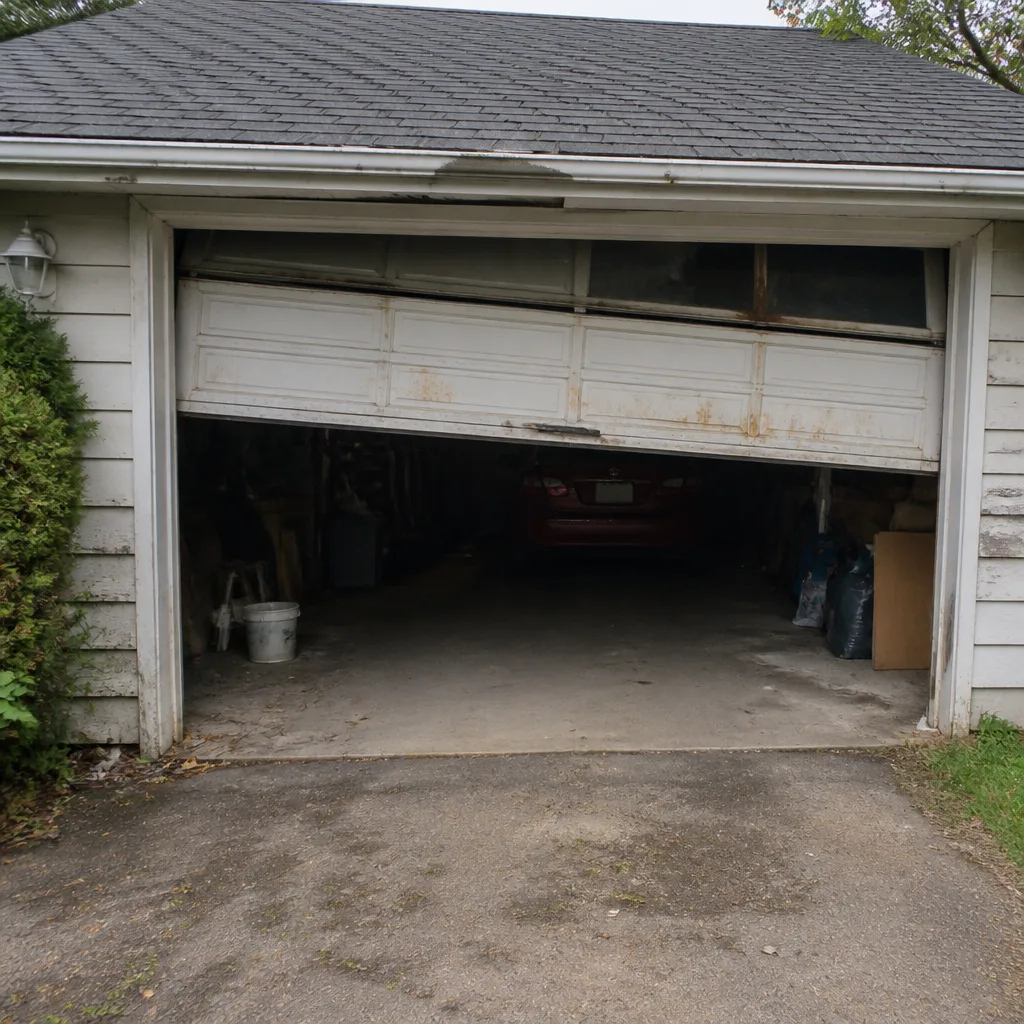 Before
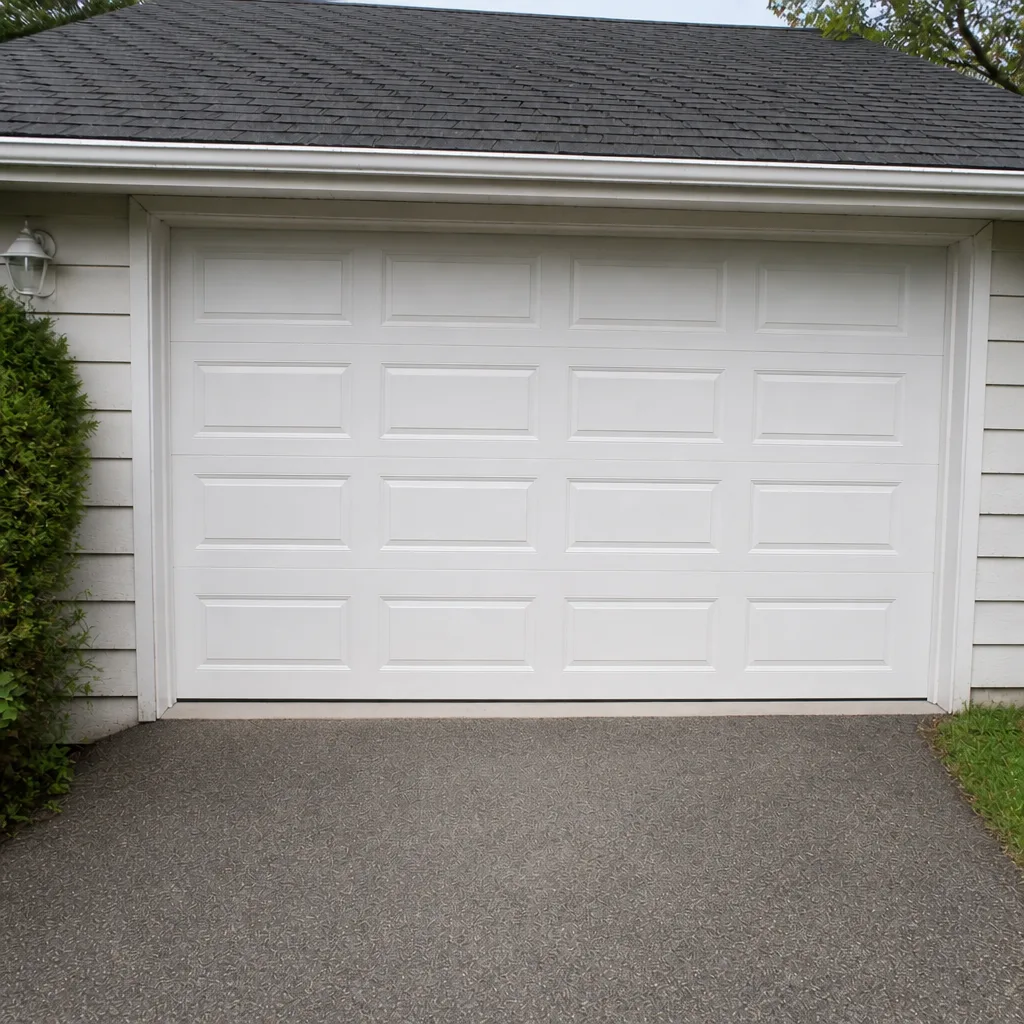 After
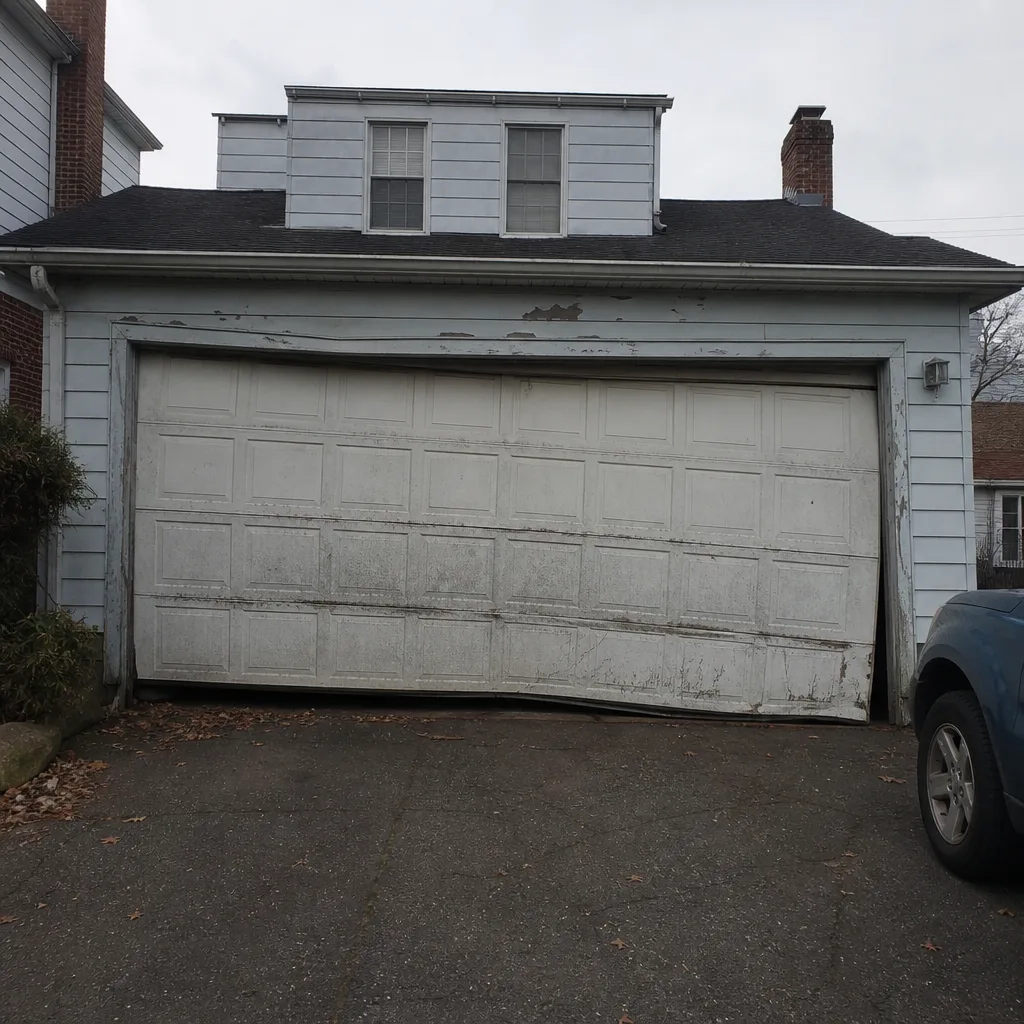 Before
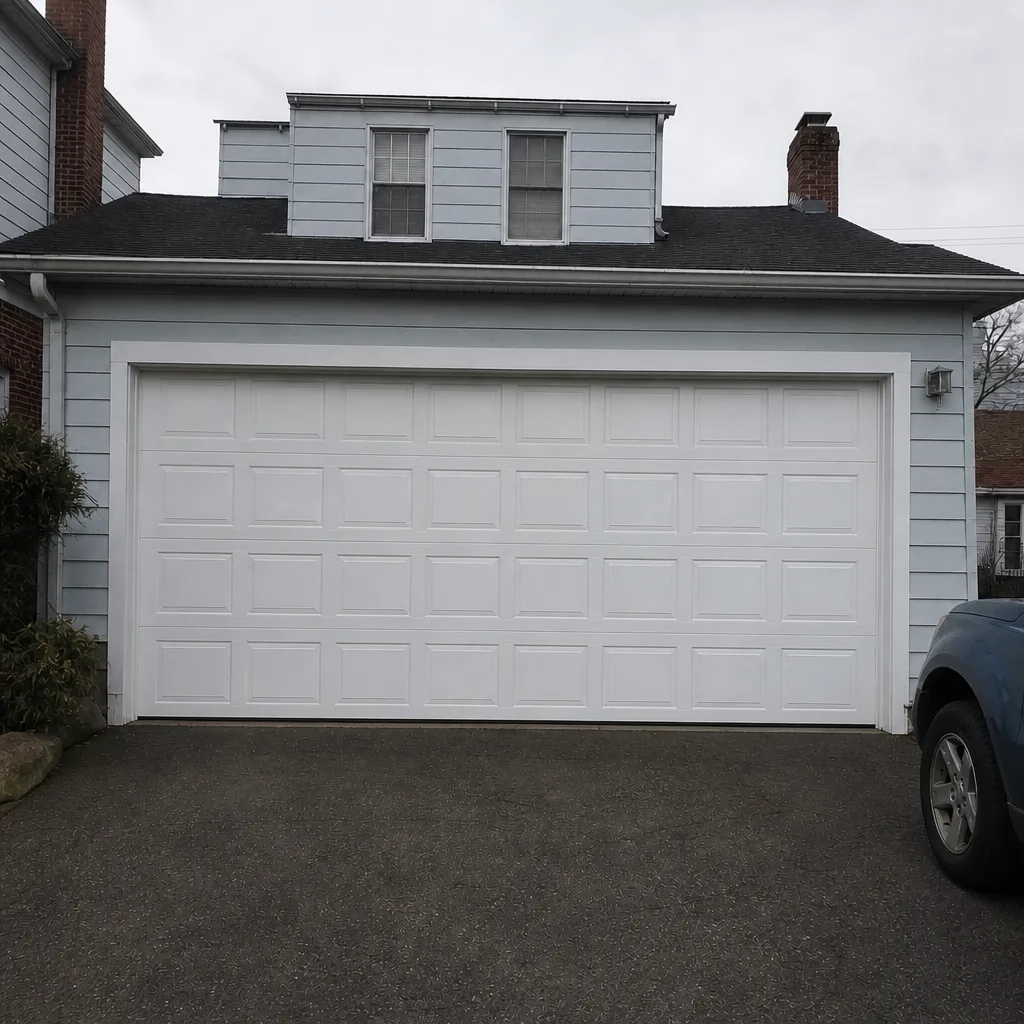 After
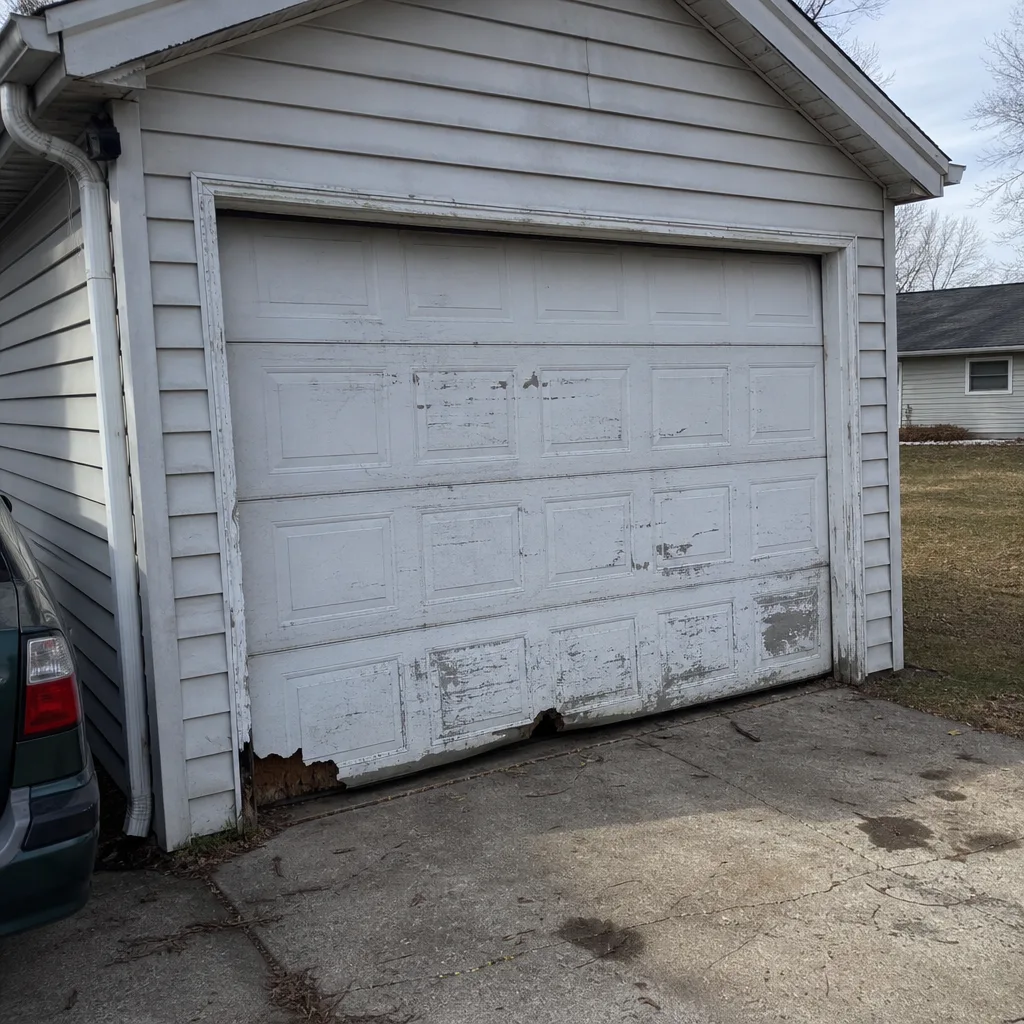 Before
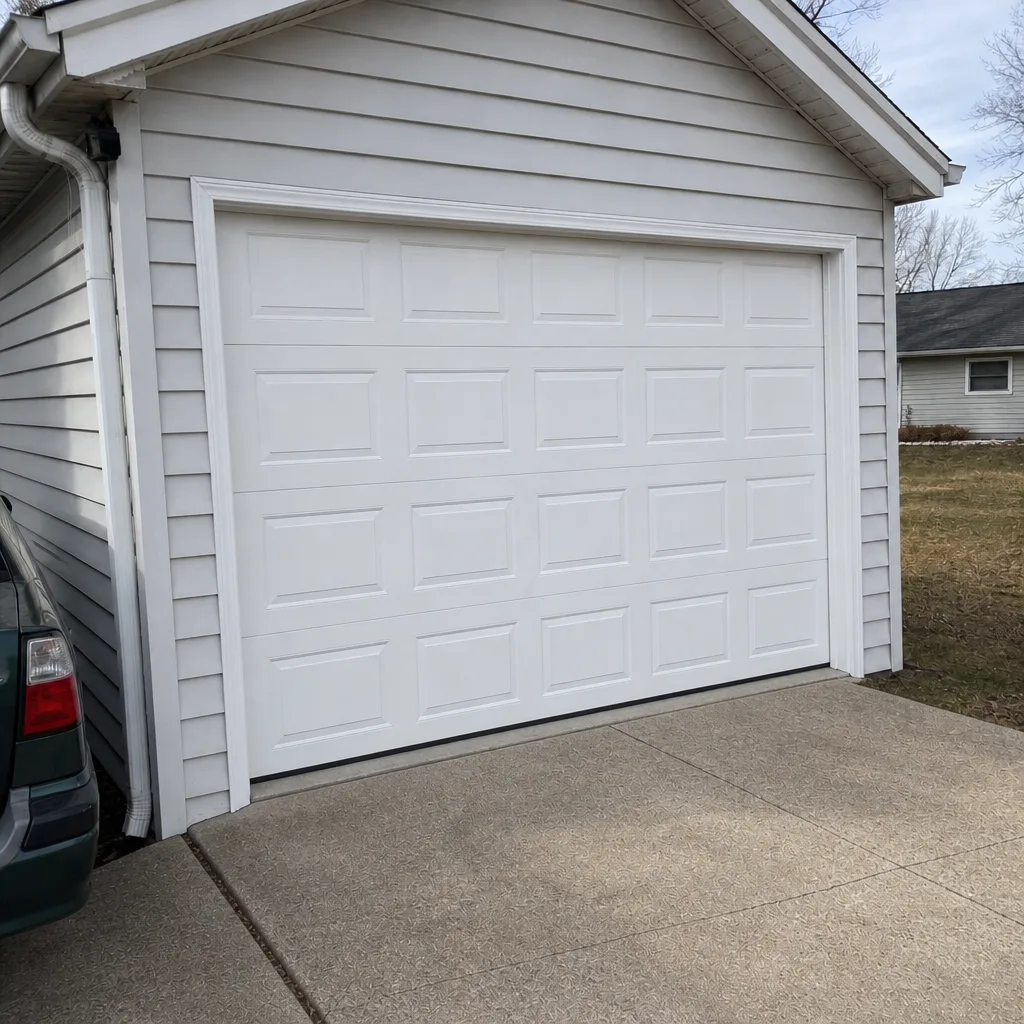 After
When to Call a Professional
A spring is broken or visibly damaged, the door won’t open or close and you can’t secure it, the door has dropped or is hanging unevenly, the opener reverses or strains, or you hear a bang from the garage and the door has lost its lift. These are all cases for a specialist, not a generalist and not a weekend project. Garage door springs, torsion cables, and opener adjustments are the areas where homeowner attempts go wrong fastest. New Britain Garage Door Repair Co offers free estimates in New Britain. Call (833) 468-5774 for an emergency call or an estimate, and tell us the brand, the door position, and the symptom. We’ll tell you what to do with the door before we arrive, and the price is quoted and agreed before any work starts.
Frequently Asked Questions
Spring repair in New Britain typically runs in the low-to-mid hundreds of dollars for a single spring, and a matched pair is roughly double because the two springs are almost always replaced together. The exact figure depends on the door’s size and the spring type, and the written estimate sets the final price. Call (833) 468-5774 for an exact quote; estimates are free.
Emergency service is available for doors that won’t close, won’t open, or pose a safety risk. We prioritize the doors that can’t wait, so call early in the day if you can. Call (833) 468-5774 and we’ll tell you what to do with the door before we arrive.
No. The quote is given and agreed before any work starts. If a technician finds something that changes the job (a bent track under a broken spring, for example), they’ll tell you before continuing, not after the work is done. Call (833) 468-5774 to arrange an estimate.
The local professionals we connect you with are licensed and insured as the state of Connecticut requires. They’re specialists in garage doors and openers, not generalists, and they work on the major brands including LiftMaster, Chamberlain, Genie, Clopay, Amarr, Clopay, Wayne Dalton, Craftsman, and Raynor. Call (833) 468-5774 with your brand and we’ll confirm the right fit.
Yes, if the springs are intact. Pull the manual release cord to disconnect the carriage, then lift the door by hand. If the door is heavy or won’t hold, the spring is likely the problem, and you should leave it and call for service. Different drive types (belt, chain, screw) reconnect slightly differently, so note your opener brand when you call (833) 468-5774.
Wedge the bottom edge, brace it against the frame with a board or two, and cover the opening with a tarp or plywood to block wind and rain. Prop the door rather than forcing it down, keep the interior door to the house locked, and call for service the same night or first thing. Call (833) 468-5774 and describe the door position so the technician arrives prepared.
The Bottom Line
A garage door emergency in New Britain is decided in the first five minutes. Know whether your door is under spring tension, know where the release cord is, know how to brace the door, and know your brand and model before you pick up the phone. None of that requires tools, and all of it turns a chaotic night into a manageable one. Post a reference card, run the balance and safety reverse check twice a year, and call a specialist for the spring. That’s the whole plan, and it holds up whether the door is a Craftsman from the previous owner or a new LiftMaster you just installed. Call (833) 468-5774 for a free estimate and we’ll talk through the door before we arrive.
Written by the team at New Britain Garage Door Repair Co.