Last updated November 22, 2026
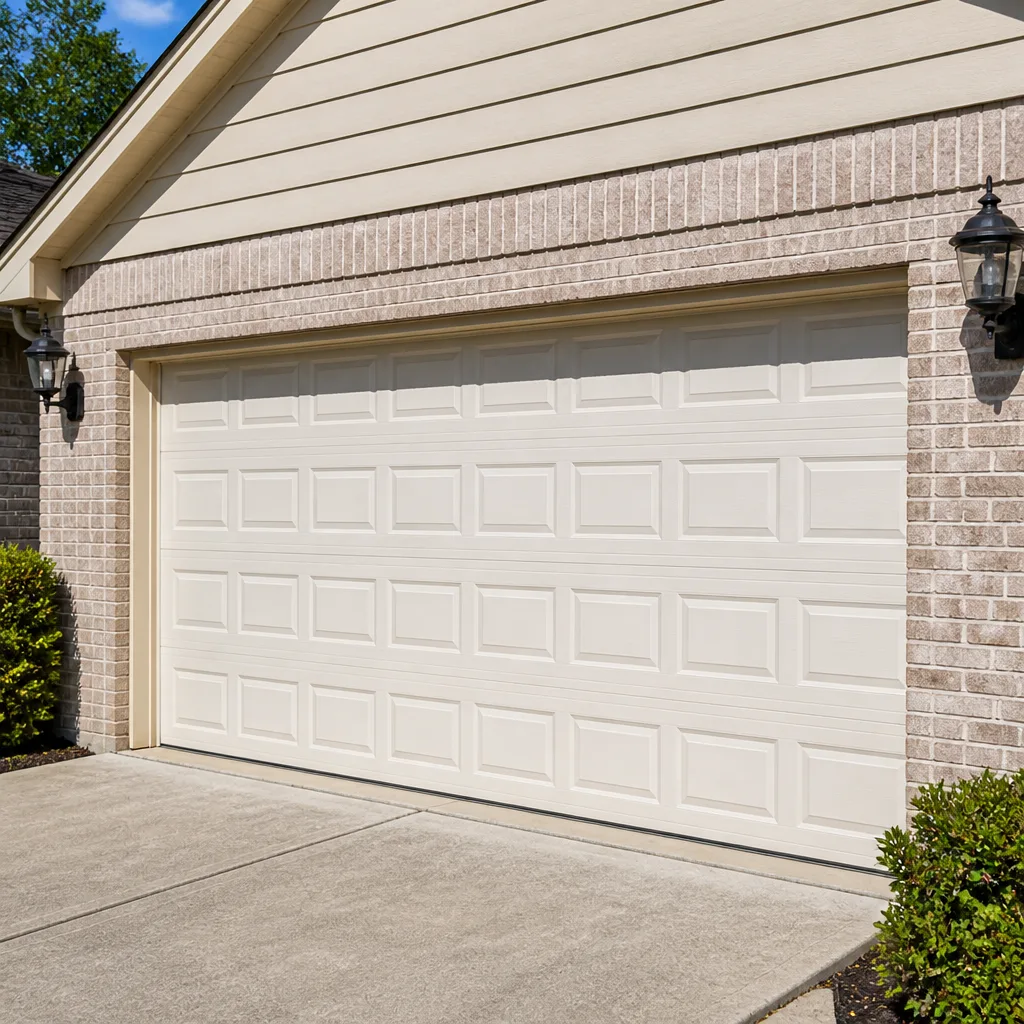 Raised-panel steel
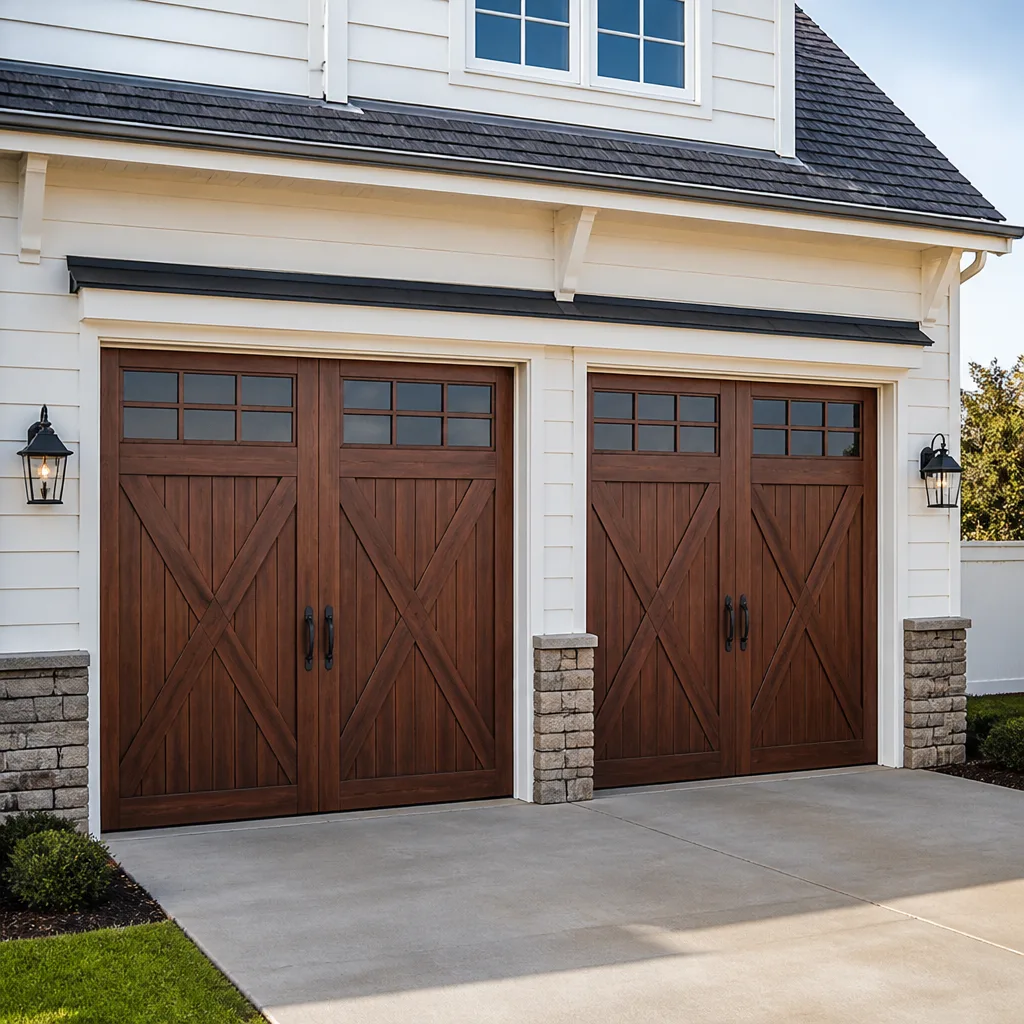 Carriage house
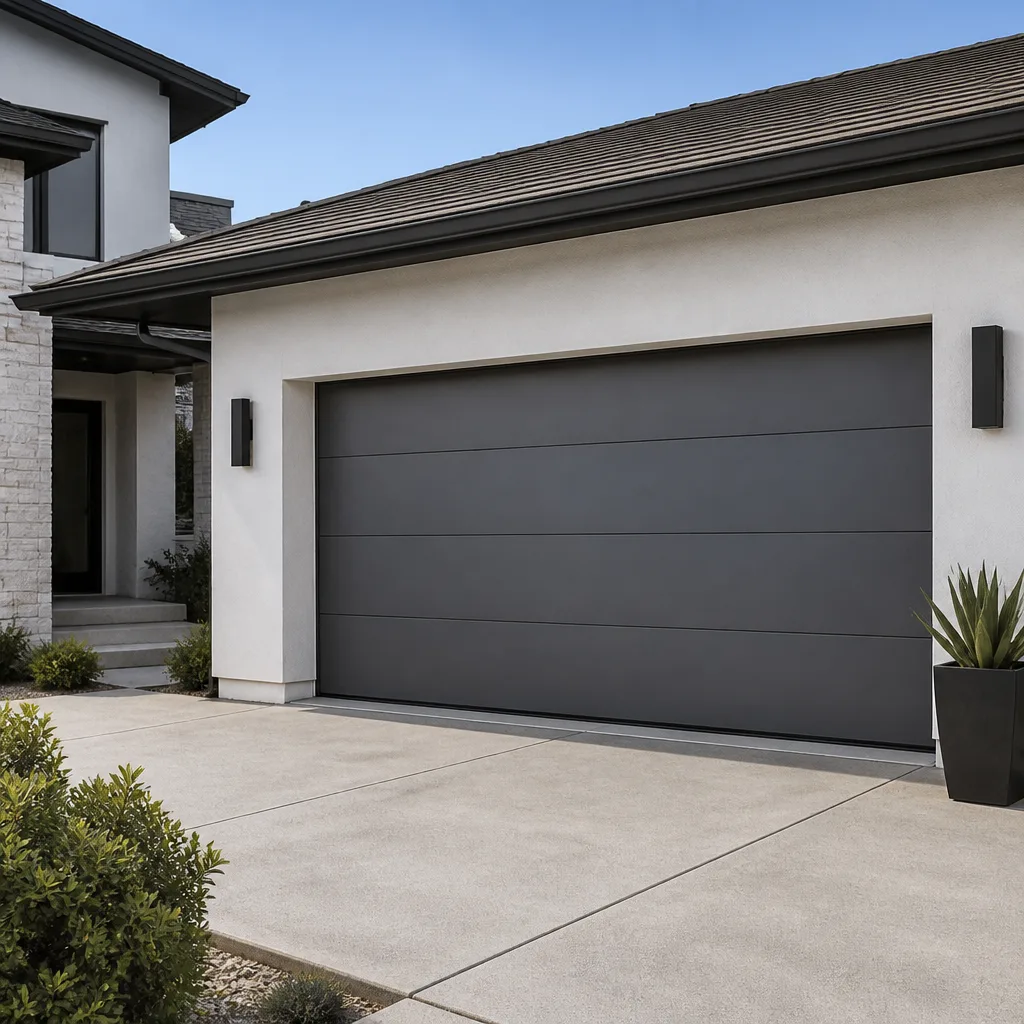 Modern flush
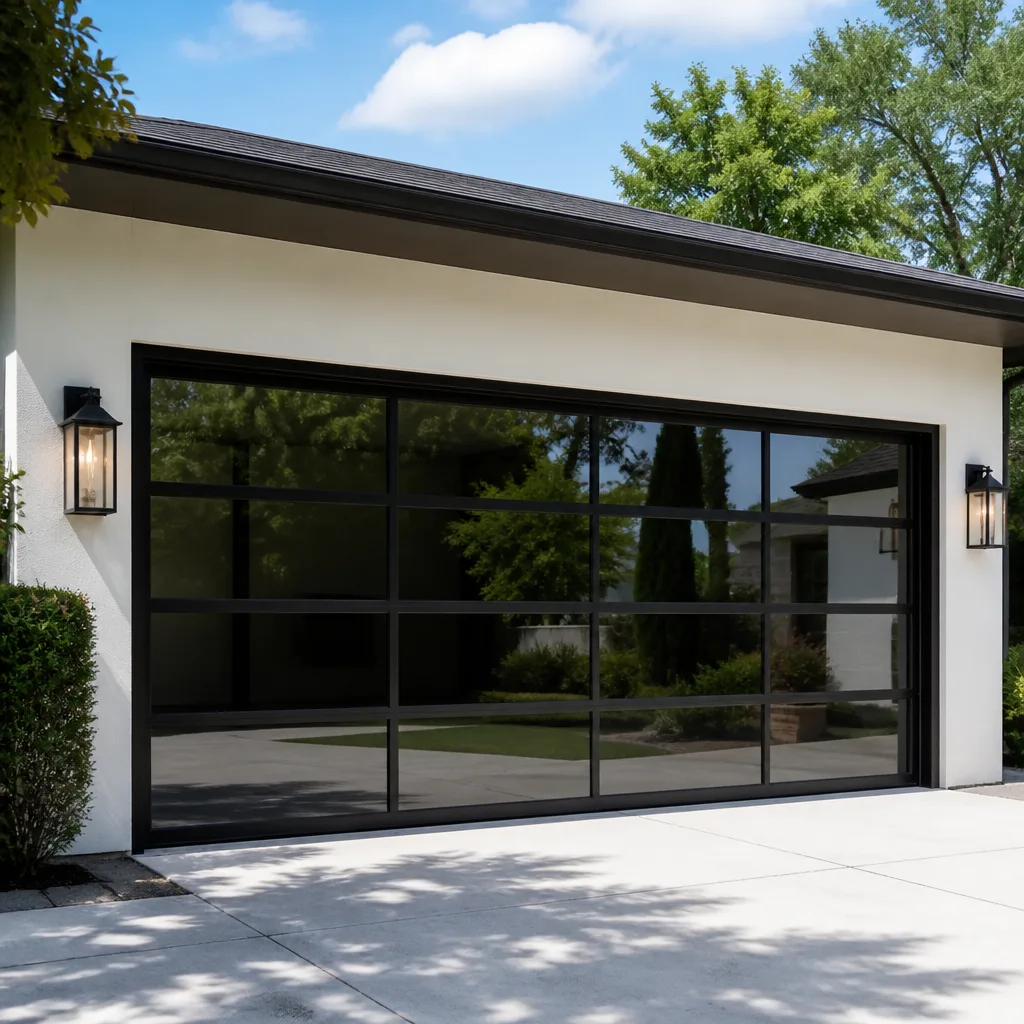 Full-view glass
 LiftMaster openers
 Chamberlain openers
Full 25-point door and opener safety check with every visit - springs, cables, rollers, tracks, and your LiftMaster or Chamberlain opener included
You get a price before we start. It does not change when the pro arrives.
Get your free estimateGarage Door Warning Signs: A New Britain Homeowner’s Reference Guide
A garage door that takes 1.5 seconds longer to open than it did six months ago has already told you something is wrong. You just didn’t hear it. Most homeowners don’t notice until the door takes 10 seconds, or stops halfway, or won’t budge on a cold morning when the car is loaded and everyone’s late. By that point the motor has been running hot on every cycle, the springs have been carrying more load than they should, and a repair that started small has grown teeth.
The problem isn’t that warning signs are subtle. They aren’t. The problem is that most people have never been told what normal looks like, so they normalize everything short of a total failure. This guide fixes that. We’ll give you the baseline, show you how to spot the deviation in about 60 seconds, and sort every sign you might see into three tiers: watch it, schedule it, or stop using the door today. Written from New Britain, where winter cold and summer humidity both put their hands on your door.
Quick Answer
Garage door warning signs fall into four groups: unusual sounds (grinding, squealing, popping, rattling), visible damage (frayed cables, stretched springs, bent tracks, worn rollers), slow or jerky movement, and a door that won’t balance when you disconnect the opener. Any sign involving a broken spring, a frayed cable, or a door that drops or won’t stay closed means stop using the door immediately and call a trained technician. Most other signs can be watched for a few days, but they rarely fix themselves.
Styles & brands we work with
- Raised-panel steel
- Carriage house
- Modern flush
- Full-view glass
- LiftMaster openers
- Chamberlain openers
Table of Contents
- What a Healthy Garage Door Actually Looks and Sounds Like
- Sound Diagnostics: What Each Noise Is Telling You
- Visual Diagnostics You Can Do From the Floor
- The 60-Second Speed and Balance Tests
- Severity Tiers: Watch, Schedule, or Stop Now
- Cosmetic vs. Critical: Telling the Difference
- How New Britain Weather Speeds Up Wear
- Common Mistakes to Avoid
- When to Call a Professional
What a Healthy Garage Door Actually Looks and Sounds Like
Before you can spot a problem, you need a reference point. A healthy door is boring. It’s quiet, steady, and consistent. If you can describe your door in those three words, you’re probably fine. If you can’t, something has shifted.
Here’s the baseline for a residential door in New Britain:
- Sound: A low, smooth hum from the opener and a soft roll of the panels. No grinding, no squeal, no chatter, no rattle at the top or bottom of travel.
- Speed: A standard door travels at roughly 7 to 8 inches per second. Full open or close should take 10 to 15 seconds. If it used to feel faster, it was faster.
- Movement: Straight up, straight down. No waddle, no shimmy, no pause at any point in the cycle.
- Balance: Disconnect the opener and lift the door halfway. A properly balanced door stays there with light hand pressure, not because you’re holding it up.
- Appearance: Cables wound evenly and snug against the drum, springs intact and straight, tracks straight and clean, rollers round and quiet in the hinge.
That’s the picture. Anything you notice that deviates from it is worth paying attention to. Most of the doors we see in New Britain with real damage didn’t fail overnight. They told the homeowner for weeks. The homeowner just didn’t have a baseline to compare against.
The other thing to understand is that this door is a system, not a collection of parts. A slow opener strains the springs. A worn roller puts side-load on the track. A stretched spring makes the opener work harder, which makes it run hot, which shortens its life. A small symptom in one area is almost always a load problem in another. That’s why “just the noise” is rarely just the noise.
Sound Diagnostics: What Each Noise Is Telling You
Sound is the earliest warning system you have, and it’s specific. Each type of noise points at a different component. Learning to tell them apart is the fastest diagnostic you can do without touching anything.
Grinding
Grinding is metal-on-metal contact, usually at the opener’s drive or in the track. On a belt-drive or chain-drive opener, grinding at the motor housing often means the gear or the drive sprocket is worn. Grinding along the track usually means a roller is seized and dragging steel against steel. Either way, grinding doesn’t resolve on its own. It gets worse, and it accelerates wear on everything downstream.
Squealing
Squealing is high-pitched and typically comes from dry or worn rollers, hinges, or the torsion shaft bearings. A door that squeals louder in winter is telling you about cold-stiffened bearings and thickened lubricant. Squealing is often the most fixable of the sounds. It’s also the easiest to ignore for a year, which is why it turns into something bigger. If your opener is a LiftMaster or Chamberlain unit with a belt drive, a squeal that seems to come from the motor is often a roller problem echoing up the track.
Popping
A sharp pop, especially at the start of travel, needs attention fast. Popping can mean a torsion spring has started to fail or has slipped on the shaft. It can also mean a section hinge is cracked, or that the door has jumped a cable off the drum. Popping is the one sound that most often moves a door straight into the “stop now” tier. Don’t keep cycling the door to “see if it does it again.” It will.
Rattling
Rattling is usually loose hardware: hinge bolts, track brackets, or the opener’s chain if it’s slack. On its own, rattle is lower urgency than grinding or popping. But rattle that showed up suddenly after a windstorm or a bump to the door is worth a closer look, because it often means something has shifted out of alignment.
In our experience in New Britain, the pattern of sounds a door makes changes with the seasons. A door that groans only on the coldest mornings is telling you about thermal contraction and stiff lubricant. A door that grinds in humid July is telling you about a roller or bearing that needs replacing. Same door, different voices.
Visual Diagnostics You Can Do From the Floor
You don’t need a ladder and you don’t need to touch anything. Every visual check below can be done standing on the garage floor, with the door closed and the opener disengaged. Do them in this order.
- Look at the cables. Follow each cable from the bottom bracket up to the drum. It should be a clean, tight spiral. Fraying, kinks, or wire strands that stick out like a brush mean the cable is failing and should be replaced before it snaps.
- Look at the springs. A torsion spring sits above the door on the shaft. It should be straight, with a tight, even coil. A visible gap in the coil, a spring that looks longer than its neighbor, or a spring that has clearly sagged means it has stretched or failed. Extension springs run alongside the tracks and should have an intact safety cable through them.
- Look at the tracks. Tracks should be straight, parallel, and at a consistent distance from the door edge. Look for dents, bends, or a gap that changes width from top to bottom. A track knocked out of alignment by a car bumper is a common New Britain issue, and a bent track will chew through rollers fast.
- Look at the rollers. Rollers sit in the hinges at each side of each panel. They should be round and seated in the hinge. A cracked roller, a flat spot, or a roller that looks cocked in the track means it’s worn or the track is off.
- Look at the panels. Panels should be straight and level. A gap between the door and the frame at one corner, or a sag in the middle, points at a balance or spring problem.
- Look at the bottom seal. A worn or torn bottom seal lets in water, cold air, and pests. It’s a small fix that protects the rest of the door.
What you’re doing here is checking for the four load-bearing failures: cable, spring, track, roller. If any of those four look wrong, don’t cycle the door until you’ve had it looked at. That’s the whole point of visual diagnostics. They tell you what not to do.
A note on safety. The springs and cables above your door are under extreme tension. High-tension garage door springs and the cables that ride them can cause serious injury if handled by hand, and no visual check on this page requires you to touch them. Leave adjustment and replacement to a trained technician. We mention this not to scare you but because it’s the one part of this trade where “I’ll try it myself” is genuinely dangerous.
The 60-Second Speed and Balance Tests
These two tests take about a minute and tell you more about the health of your door than any other check. Do them on a dry day, with nothing under the door.
The Speed Test
Watch the door make one full open cycle. Time it in your head, or use the stopwatch on your phone. A standard residential door takes about 10 to 15 seconds to open fully. If it takes noticeably longer than it used to, the opener is straining. If it slows down partway through the travel, that’s a balance problem. If it reverses or stops before reaching the top, the opener’s safety system has tripped and the door needs service. A door that has slowed down by 20 percent is telling you the opener is running hot on every cycle, and running an opener hot is how you turn a spring repair into a spring-and-opener repair.
The Balance Test
Close the door. Pull the manual release cord on the opener (usually a red handle hanging from the rail). Now lift the door by hand to about halfway and let go.
- Stays put: Springs are balanced. Good.
- Drifts down slowly: Springs are losing tension. Worth monitoring and probably worth a service call soon.
- Drops fast or slams down: Springs have failed or are dangerously weak. Stop using the door entirely.
- Rises on its own: Springs are over-tensioned or imbalanced. Same as above. Stop and call.
Reconnect the opener by re-engaging the release (usually by pulling the cord again or running the opener one cycle). If the door drops or rises on its own during the balance test, don’t reconnect and don’t keep testing it. Those are stop-now signs, and they mean the door is one cycle away from a dangerous failure.
Property managers in New Britain should run these two tests on a schedule, not just when something sounds off. A quarterly speed-and-balance test on a multi-door property catches spring wear weeks before a tenant calls it in. When we do garage door repair for a rental property, the speed-and-balance check is the first thing we do.
Severity Tiers: Watch, Schedule, or Stop Now
Not every warning sign is urgent, and treating every squeak like an emergency trains you to ignore the real ones. Here’s how we sort signs into three tiers in the field.
Tier 1: Watch for a Week
- Occasional squeal during a cycle
- Loose rattling that’s stable and doesn’t grow worse
- A door that’s slightly slower than usual but still reaches full open and close
- Cosmetic dents or scratches in a panel
- A worn bottom seal
These are worth monitoring. If they don’t change in a week, they can usually wait for a scheduled appointment. If any of them start to escalate, move up a tier.
Tier 2: Schedule Within 48 Hours
- Consistent grinding at the track or opener
- Cables with visible fraying or kinks
- A door that slows or pauses partway through the travel
- A roller that’s cracked, flat, or cocked in the track
- A track that’s clearly bent or out of parallel
- A balance test that shows slow drift downward
These aren’t emergencies today, but they’re the kinds of problems that go from a two-hour fix to a replacement conversation in a week. Getting them scheduled is the difference between a repair and a replacement. It’s also why we offer same-day service for repair calls in New Britain. If you’re looking at a Tier 2 sign on a Monday, you don’t need to wait until next week to hear back. Call and we’ll get someone out.
Tier 3: Stop Using the Door Now
- A torsion spring with a visible gap or clear break
- A door that drops fast or rises on its own during the balance test
- A visible broken cable or a cable off the drum
- A door that came off its tracks or is hanging at an angle
- A loud pop followed by the door not opening
- A door that won’t close, or won’t stay closed
- Any time the door binds hard enough that the opener strains or reverses
Tier 3 signs mean stop. Don’t open the door manually to move a car. Don’t hold the button to “get it up one more time.” A failed spring or cable changes the entire load path of the door, and the door can come down under its own weight without warning. This is the situation our garage door spring repair emergency response exists for. If a door is in Tier 3, call us for emergency service. We’ll tell you on the phone whether the door is safe to touch at all.
Cosmetic vs. Critical: Telling the Difference
The gap between “my door looks a little rough” and “my door is about to fail” is where most homeowners get stuck. So let’s draw the line clearly.
Purely cosmetic: Dents and scratches in a panel that don’t affect how the panel sits against the frame or how the door moves. Faded paint. A cracked window pane that doesn’t compromise the panel structure. A stained bottom seal that isn’t torn. These are real and worth fixing on your own timeline, but they don’t raise the failure risk of the door.
Critical: Anything that changes the door’s movement, balance, or load. A dent that pushes a panel out of plane and makes the door bind in the track. A scratch that reveals a wind or impact crack running through the panel. Any damage to a hinge that shifts the roller. A row of worn rollers that produces consistent shimmy. Cables, springs, and any visible gap in either.
The way to tell the difference is movement. Cosmetic damage doesn’t change how the door cycles. Critical damage does. If the door opens and closes exactly the way it did before the damage appeared, it’s cosmetic. If the door moves differently in any way, it’s critical, and it needs a trained look.
On a multi-door property in New Britain, this distinction matters for the budget. Treating cosmetic wear like a critical failure burns money on non-problems. Treating a critical failure like cosmetic wear burns money on full replacements that a repair would have prevented. Our technicians have up to 14 years of experience reading that line, and it’s the first thing they assess on any service call.
One thing we hear from homeowners is that the door “was fine last week.” In our experience, cosmetic damage and critical damage both look similar to a tired eye on a Saturday morning. The tell is the movement. If the movement changed, the damage is critical.
How New Britain Weather Speeds Up Wear
Your garage door is one of the only parts of your house that moves every day and sits in an unconditioned space every night. In New Britain, that space sees hot, humid summers and cold, snowy winters. Both seasons put their hands on the door in different ways.
Winter is the season of stiff bearings and thickened lubricant. Rollers that turn freely in September can squeal on the first cold morning in December. Metal contracts, and tolerances that were fine in the fall can suddenly bind. A door that sat outside all summer with plenty of spring tension still needs that tension to work in the cold, and worn springs have less margin when the thermometer drops. This is why Tier 1 squeals in autumn are worth watching into winter, and why Tier 2 sounds in winter are worth scheduling sooner than the standard 48-hour rule.
Summer is the season of humidity and expansion. Wood-framed openings swell. Tracks shift a millimeter or two. Steel panels expand. A door that was aligned in April can start rubbing in July. Humidity also finds its way into older seals and hinges, and a seal that was already compromised will let moisture behind the door and into the frame. Our recommendation is a visual check at the start of both seasons. It catches the two seasonal failure modes at their start.
Connecticut also sees its share of wind and storm events throughout the year, and a wind-driven branch or general impact can knock a track out of alignment without the homeowner hearing it. The door starts rattling, the roller starts wearing, and the next thing you know you’re scheduling a repair on a door that had nothing wrong with it a month earlier. If you’ve had a storm come through, do the 60-second speed and balance test the next day. It takes less time than checking the weather, and it catches exactly this kind of hidden damage.
One thing we don’t hear much about in New Britain is hail damage. Hail is uncommon here, and most of the impact damage we see is from wind-blown debris and car contact. That doesn’t mean your door can’t be damaged by weather. It means the storm damage worth checking for is impact and alignment, not hail strikes.
See the difference
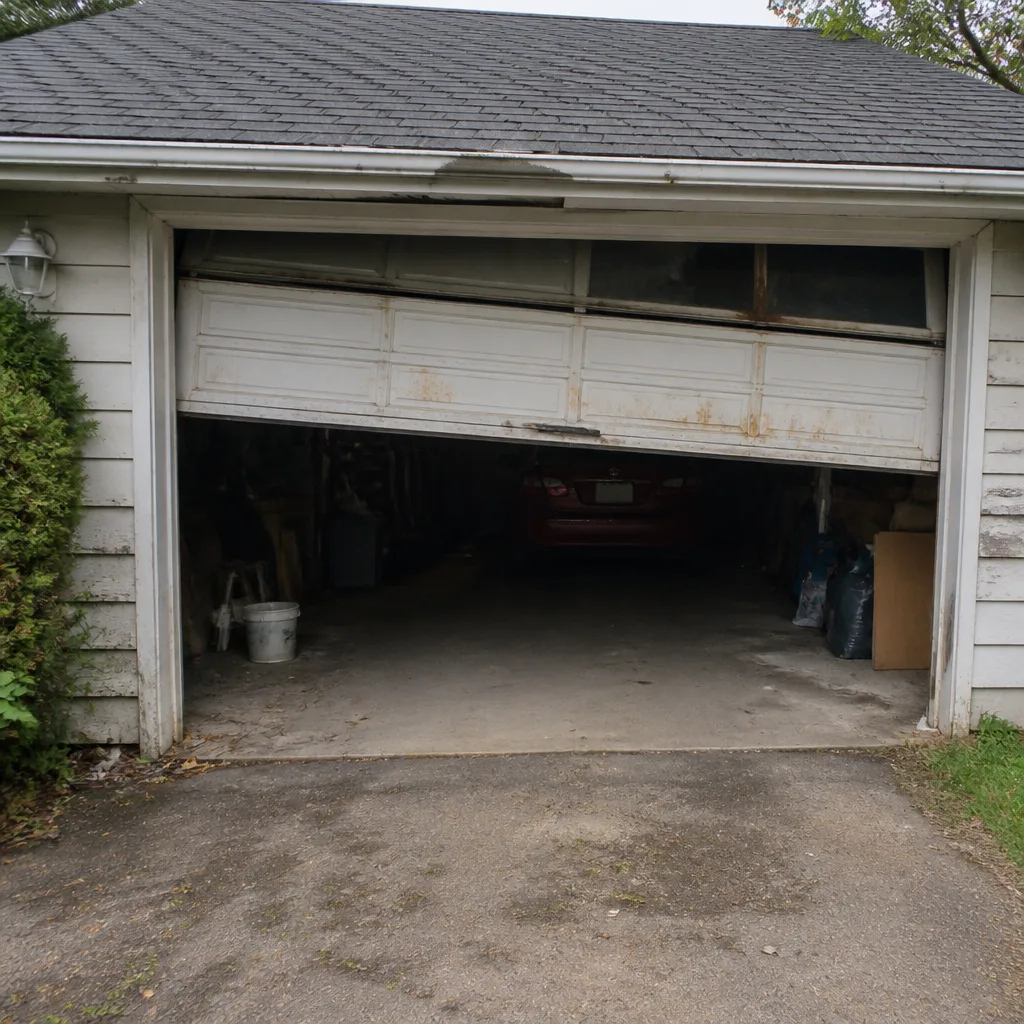 Before
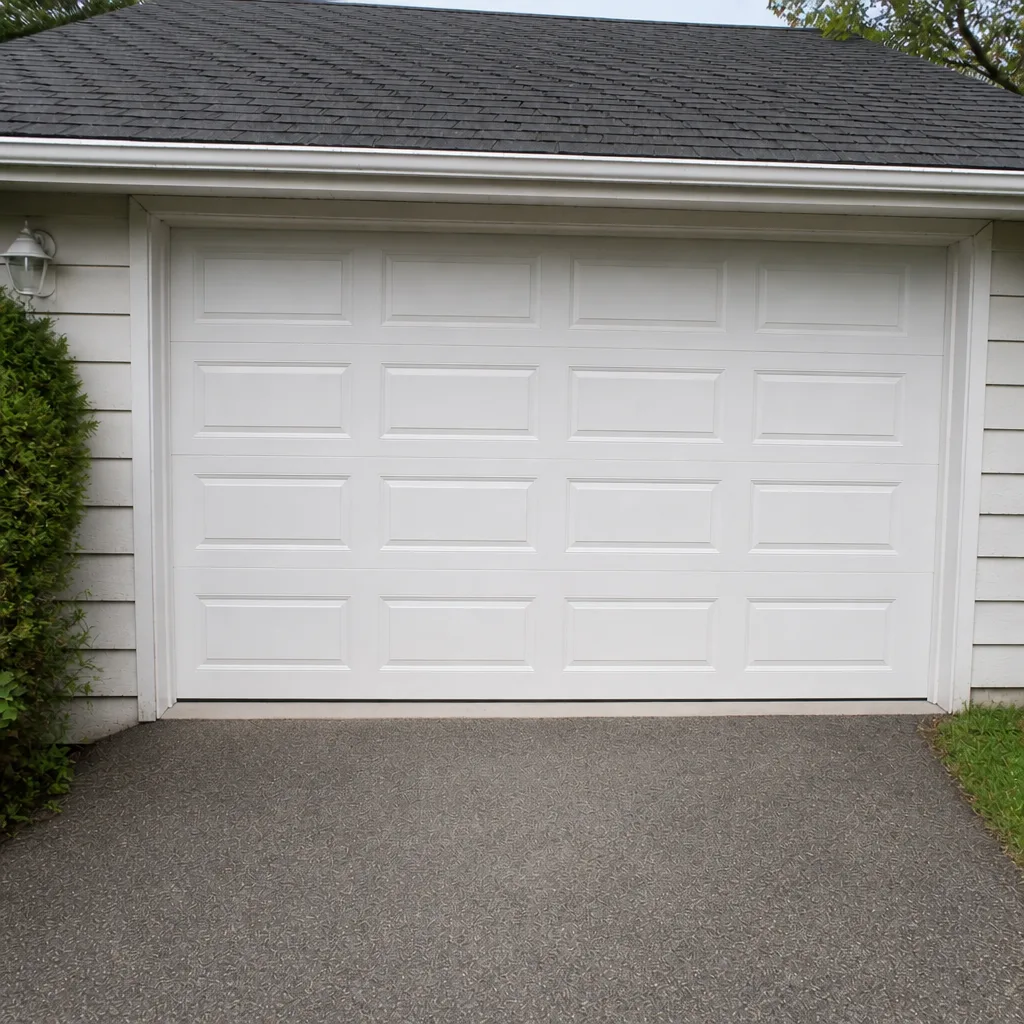 After
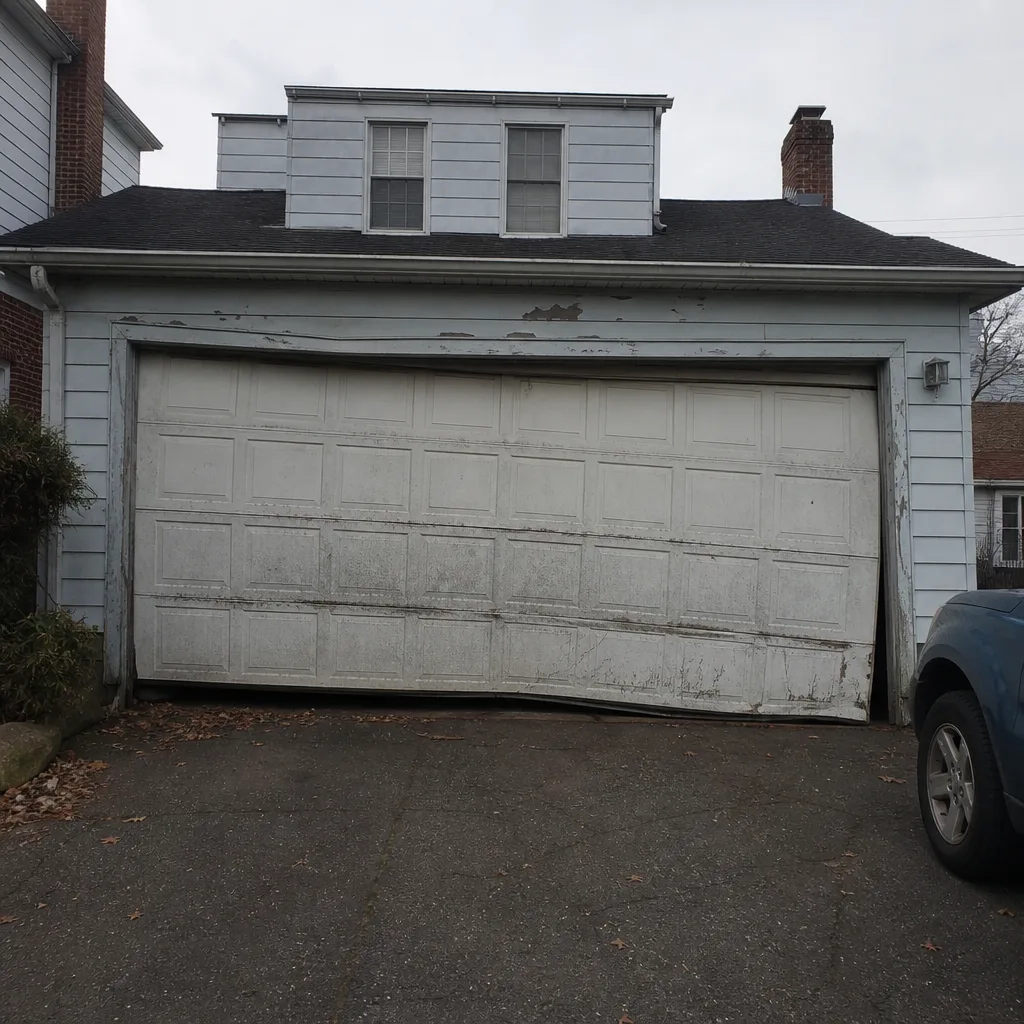 Before
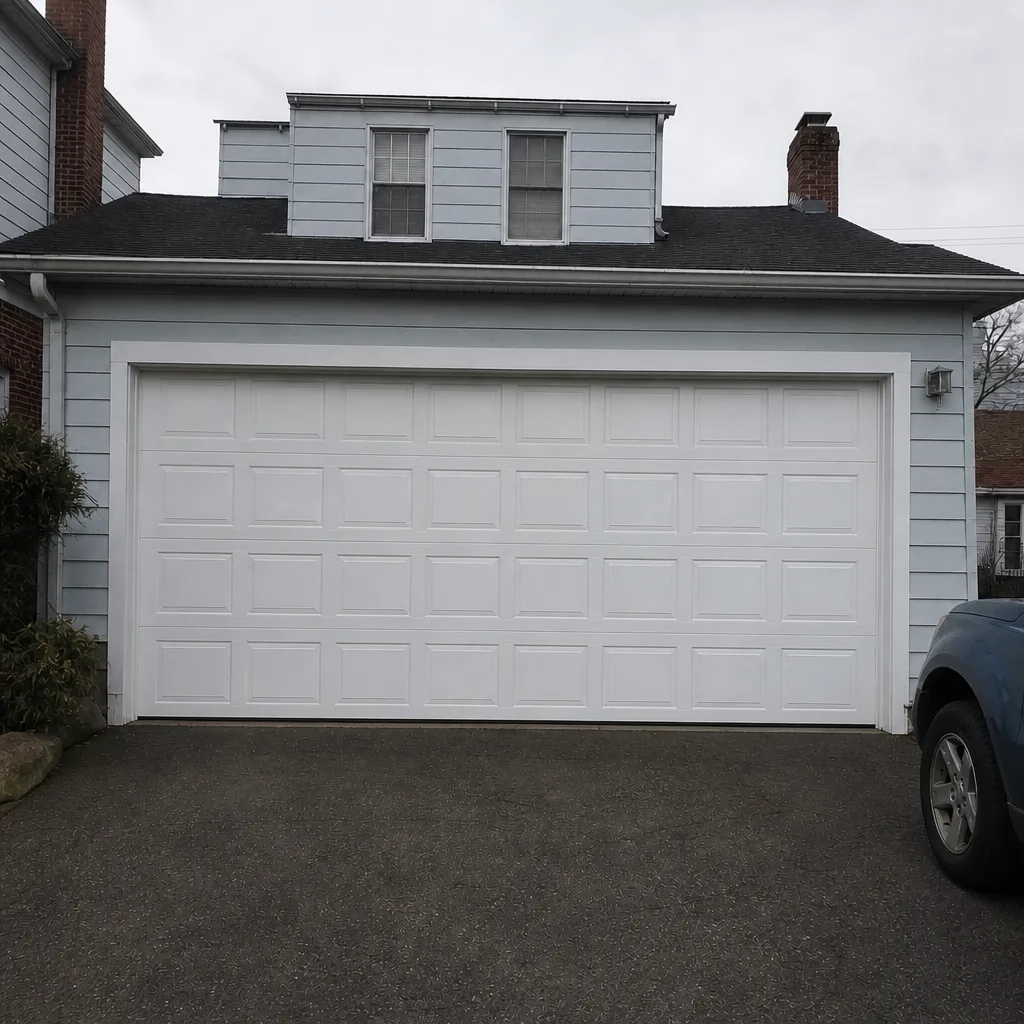 After
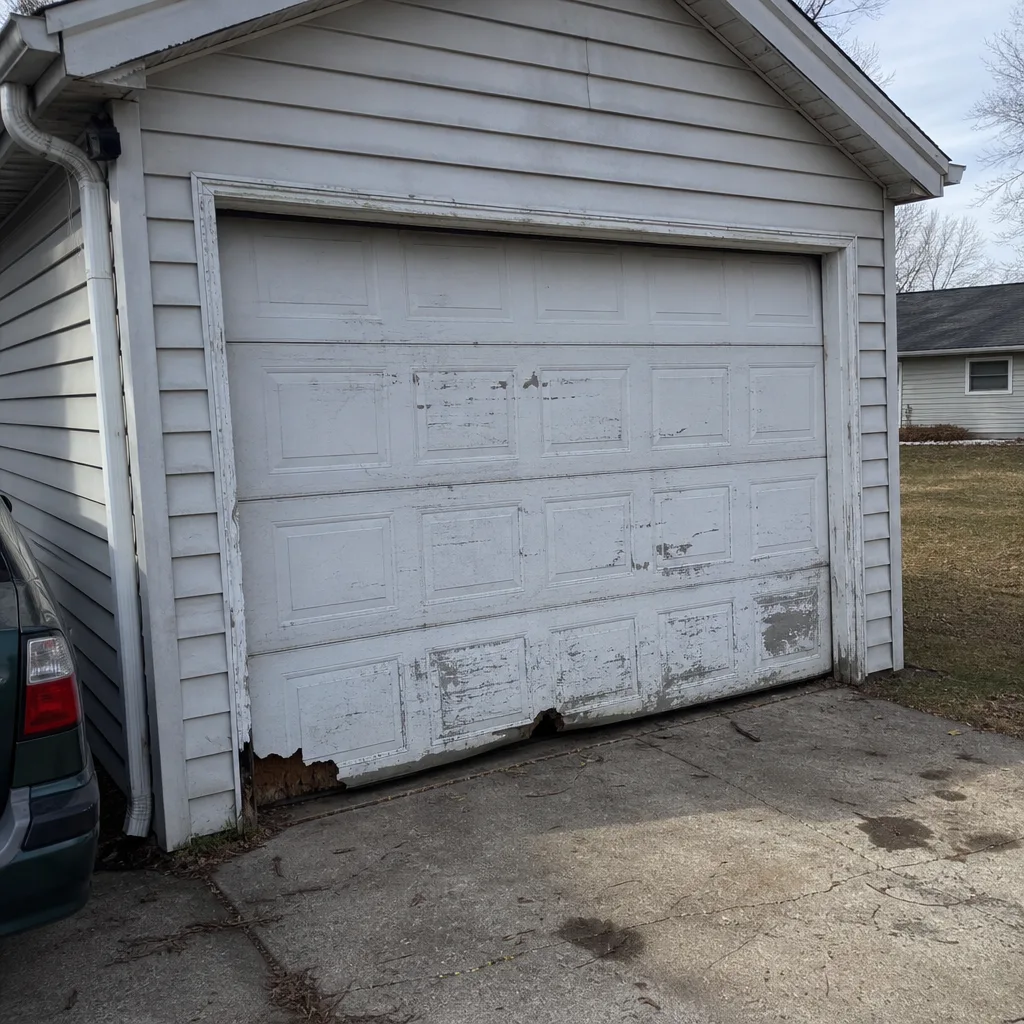 Before
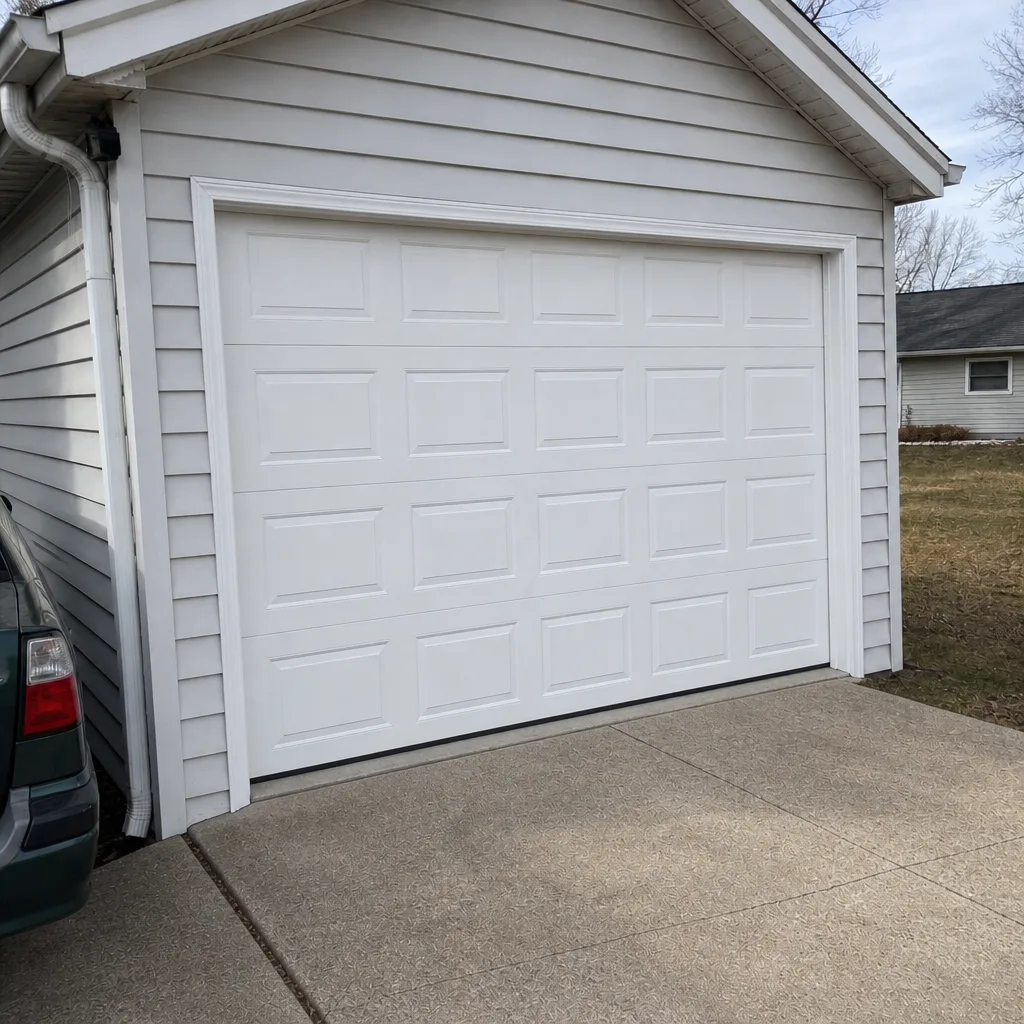 After
Common Mistakes to Avoid
- Greasing the springs. Lubricating the torsion spring does the opposite of what most people intend. It attracts grit, which accelerates wear. Springs need no lubrication. Rollers, hinges, and bearings do. If you’re not sure which is which, don’t guess. Call a technician.
- Ignoring a slow opener. A door that takes two extra seconds today takes six in a month. The motor is running hot every cycle, and the repair bill grows with it. Slow is a symptom, not a personality trait.
- Forcing a stuck door. When the opener reverses and the door won’t close, most people hold the wall button down to override it. That’s a safety feature being defeated. Stop, figure out why, and either fix that or call for garage door opener repair.
- Treating cable fraying as cosmetic. Cables carry the full weight of the door. A frayed cable can snap without warning, and when it does, the door drops. This is never a watch-tier sign.
- Buying a new opener for a door problem. Homeowners sometimes replace a “failing” opener when the real problem is an unbalanced door. The new opener strains in exactly the same way. Balance first, hardware second.
- Skipping the manual release. If you haven’t pulled your manual release cord in a year, test it once. It’s the backup you need when the opener fails, and a seized release is a safety problem in itself.
- Letting a brand mismatch delay repair. We work on the brands already in New Britain garages, including LiftMaster, Chamberlain, Genie, Clopay, Amarr, Wayne Dalton, Craftsman, and Raynor. If your door or opener is one of those, the “I need to find someone who handles my brand” excuse doesn’t apply. We handle the brand you already have.
When to Call a Professional
Call a professional when you see any Tier 2 or Tier 3 sign on this page. That’s the short version. The longer version is when you’ve run the 60-second speed and balance tests and something didn’t feel right. When the door has stopped sitting level. When the door won’t close or won’t open at all. When the door came off the track. When you’ve heard a pop and the door stopped moving. When you’re a property manager whose tenant has reported something you can’t see for yourself. Any of those moments is a call.
New Britain Garage Door Repair Co offers free estimates in New Britain. Call (833) 468-5774. Our technicians have up to 14 years of experience, and we’ll tell you plainly what we find, whether it’s a spring, an opener, a panel, or a full door. If it’s something you can safely monitor for another week, we’ll say so.
Frequently Asked Questions
The most common warning sign we see is a door that has slowed down slightly or started making a low grinding or squealing sound during a cycle. Both usually point at a worn roller, a bearing that needs lubricant, or a spring that’s starting to lose tension. It’s rarely a one-part problem. Call (833) 468-5774 for an exact quote on the repair, and we’ll tell you what we’re seeing before any work starts.
A typical garage door spring replacement in New Britain runs in the range our written estimate gives you for your door, per spring. If your door uses a matched pair, it’s usually replaced together, so the pair costs about twice the single-spring estimate. Diagnostic visit and any safe-removal work are quoted separately. Call (833) 468-5774 for an exact quote, and we’ll quote it before any work starts.
Yes, for most repair calls in New Britain we can offer same-day service. If the sign is a Tier 3 sign (broken spring, snapped cable, door off the track, door that won’t close), it’s an emergency call, and we prioritize it. If the sign is Tier 1 or 2, we’ll still work to fit you in today if we can. Call (833) 468-5774 and we’ll tell you what we can do before you commit.
No. The written quote we give you after inspection is the price, and that’s the number we agree on before any work starts. If we find something that changes the scope, we come back to you with a new quote and you decide. We don’t start work and surprise you at the invoice stage. Call (833) 468-5774 for a free estimate and a written quote.
The local pro we connect you with is licensed and insured as their state requires, and we vet every professional we work with before we send them to your door. We work on all the major brands you’ll find in New Britain garages, including LiftMaster, Chamberlain, Genie, Clopay, Amarr, Wayne Dalton, Craftsman, and Raynor, so your existing system is a system we already know. Call (833) 468-5774 for a free estimate.
Some signs are safe to handle yourself: a worn bottom seal, cosmetic panel damage, a manual release cord that needs testing. Signs involving springs, cables, tracks, and openers are not DIY repairs. Those components are under heavy tension and can cause serious injury. Call (833) 468-5774 for a trained technician look, and we’ll quote any repair before it starts.
Understanding How Warning Signs Cluster
One thing that surprises homeowners is how rarely a warning sign shows up alone. A slow opener is usually paired with a squeal. A popped spring usually comes with an off-balance door that won’t sit level. A bent track usually shows up alongside a worn roller on that side. This is because the door is a system, and a failure in one part changes the load on every part.
When we see a door in New Britain with a cluster of signs, we start at the load path. Springs first. Cables and drums second. Tracks and rollers third. Opener last. That order matters because a repair that only addresses the last symptom leaves the real problem in place. A new opener on a door with worn springs is a new opener that will fail early. A new roller on a bent track is a new roller that will wear out fast. Getting the order right is what turns a repair call into a durable fix. Our technicians have up to 14 years of experience reading this pattern, and it’s the main reason we can usually tell you what’s wrong before we arrive. When you call, describe the sound, the speed change, and any visible damage in that order. It’s the same order we work in.
The Bottom Line
Garage door warning signs are not subtle. They’re just unfamiliar. Once you know the baseline (quiet, steady, 10 to 15 seconds to open, balanced at the midpoint), the deviation is obvious. Watch for noise changes, visible cable or spring damage, slow movement, and a door that won’t balance. Sort what you see into three tiers: monitor for a week, schedule within 48 hours, or stop using the door now. Don’t grease springs, don’t force a stuck door, and don’t buy a new opener for a balance problem.
If you’re not sure which tier your door is in, call. New Britain Garage Door Repair Co is your local garage door specialist, and we work on the brand you already have. Call (833) 468-5774 for a free estimate. Our technicians have up to 14 years of experience, and we’ll quote the price before any work starts. Whether it’s a repair, a replacement, or just a question about a noise you’ve been meaning to ask about, we’re ready when you are.
Written by the team at New Britain Garage Door Repair Co.