Last updated November 22, 2026
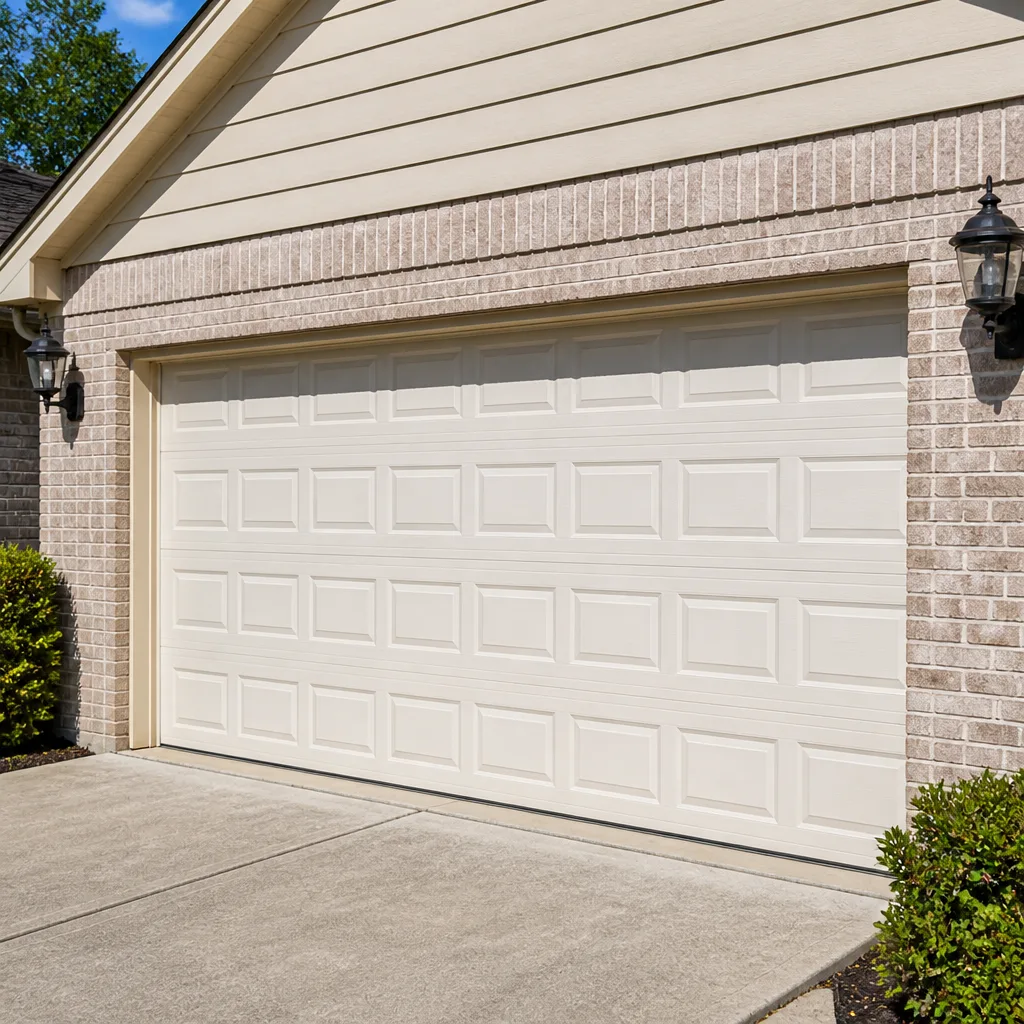 Raised-panel steel
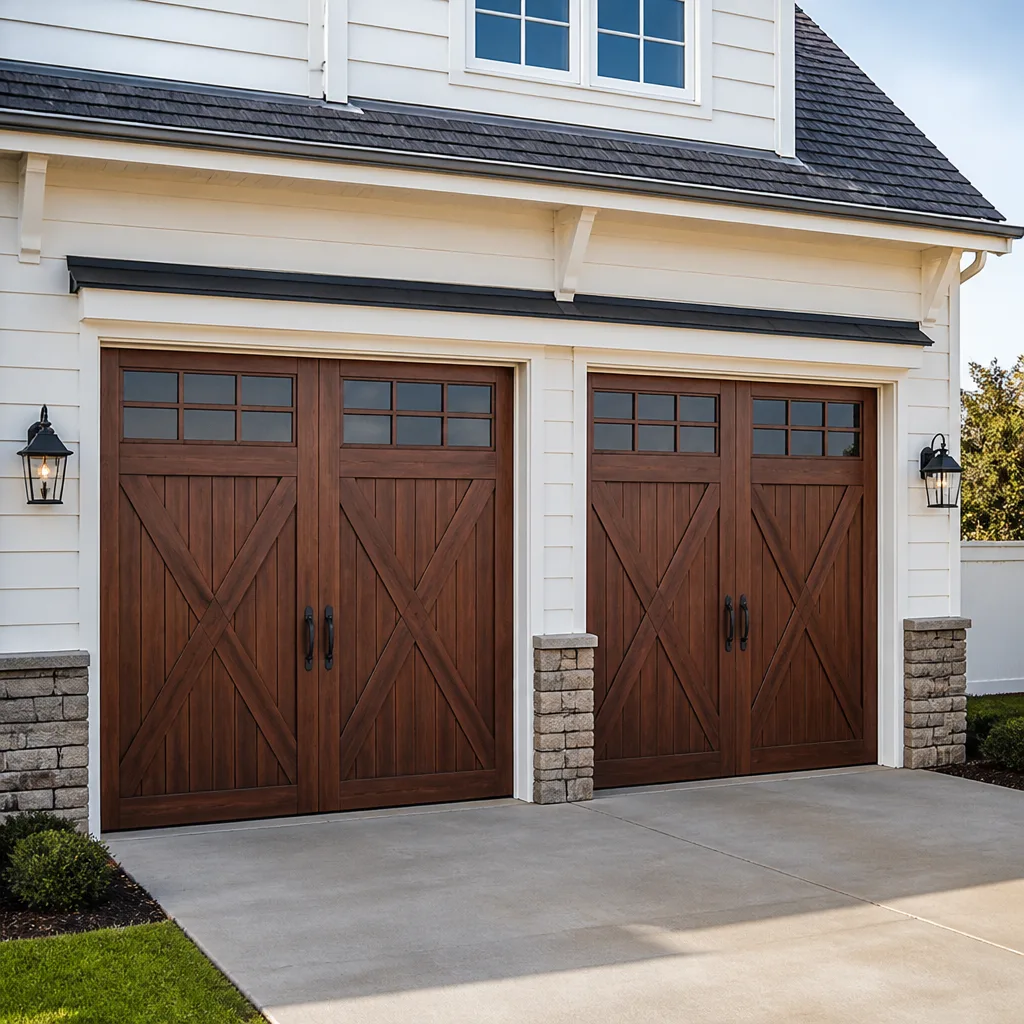 Carriage house
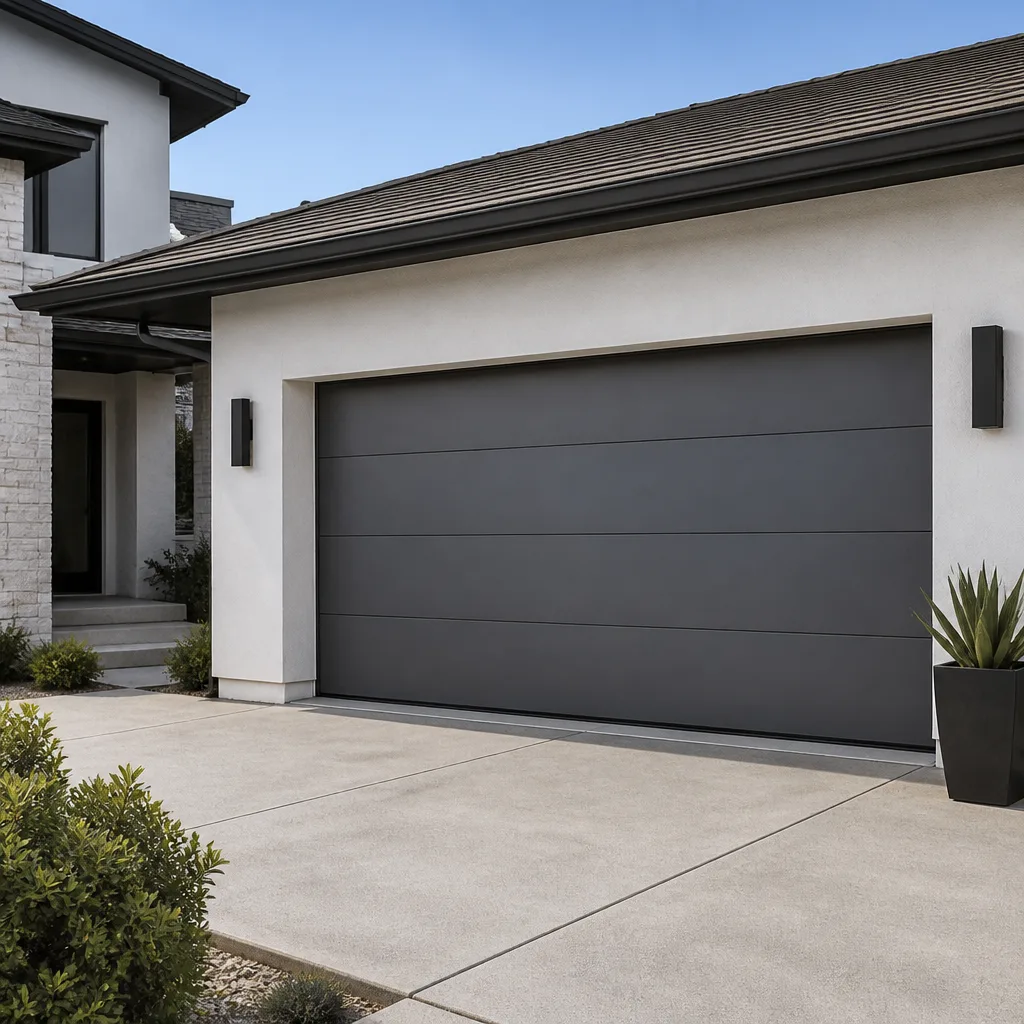 Modern flush
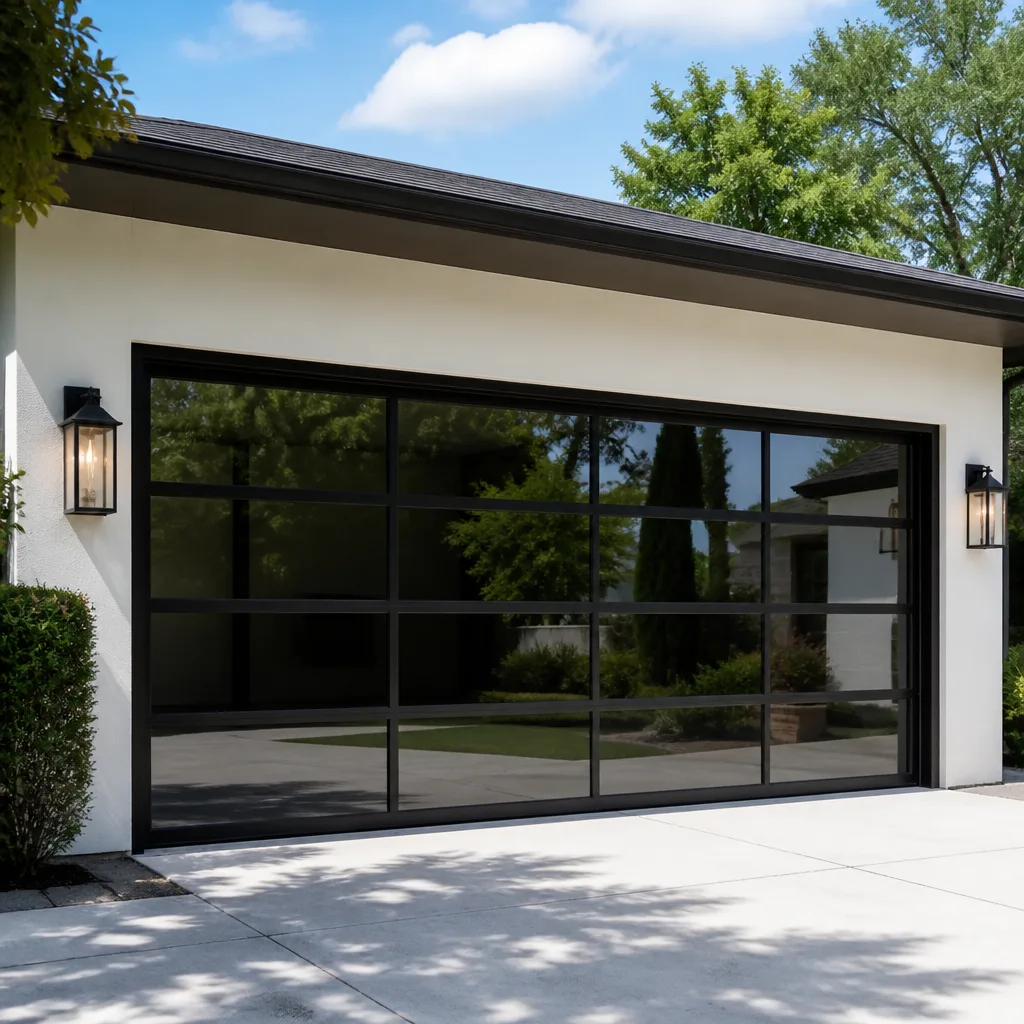 Full-view glass
 LiftMaster openers
 Chamberlain openers
Full 25-point door and opener safety check with every visit - springs, cables, rollers, tracks, and your LiftMaster or Chamberlain opener included
You get a price before we start. It does not change when the pro arrives.
Get your free estimateGarage Door Repair Maintenance Checklist for New Britain Homeowners
Most garage door maintenance advice tells you to lubricate the moving parts and give everything a “visual inspection.” That’s not a checklist, it’s a shrug. A visual inspection is only useful if you know what a part looks like right before it fails, and nearly every broken door we see in New Britain passed someone’s visual inspection the week before it snapped. The single most-missed item here is the bottom seal. Homeowners do check it, but they don’t know a seal can look perfectly intact while it’s already funneling cold air and meltwater onto the bottom panel, corroding it from the inside out. This guide is a task-by-task checklist built around the failure patterns we actually see on New Britain service calls, split cleanly into what you can do yourself and what needs a technician.
Quick Answer
A garage door maintenance checklist for New Britain should cover four things: a monthly safety test of the auto-reverse and photo-eye, a cleaning and proper lubrication of hinges, rollers, and springs (never WD-40), a close look at the bottom seal and weatherstripping before each freeze, and a balance test that reveals a weakening spring before it breaks. Anything involving springs, cables, or the opener’s internal gearing belongs to a trained technician, not a weekend project. Do the homeowner-safe items seasonally and you’ll catch most failures weeks before they strand your car.
Styles & brands we work with
- Raised-panel steel
- Carriage house
- Modern flush
- Full-view glass
- LiftMaster openers
- Chamberlain openers
Table of Contents
- What You Can Safely Do Yourself vs. What Needs a Technician
- The Bottom Seal: The Item New Britain Homeowners Miss Most
- Testing Auto-Reverse and Photo-Eye in Under Two Minutes
- Reading the Signs a Spring Is Near Failure
- Why WD-40 Shortens Roller Life (and What to Use Instead)
- The Balance Test That Catches a Failing Spring
- A Seasonal Timing Guide for New Britain Weather
- When to Call a Professional
What You Can Safely Do Yourself vs. What Needs a Technician
The gray area is where people get hurt, so here’s the line drawn plainly. You can clean, you can lubricate, you can test, and you can observe. You cannot safely adjust, replace, or disconnect springs, cables, brackets, or the opener’s internal drive components. A torsion spring under tension stores enough energy to cause serious injury when released, and the cables that run beside it are just as unforgiving.
Split your checklist like this:
- Safe for you: wiping down tracks, lubricating hinges, rollers, and the spring with a proper lubricant, testing the auto-reverse and photo-eye, checking the bottom seal and side weatherstripping, listening for new sounds, watching for panel dents or rust, clearing debris from the tracks.
- Technician only: replacing a spring, adjusting or replacing cables, replacing bent track sections, adjusting the opener’s travel limits or force settings, replacing rollers that have seized, realigning a door that has come off its track, and any electrical work inside the opener.
- Stop and call: a loud bang from the garage, a door that hangs at an angle, a door that won’t stay down, a sagging top section, or a spring with a visible gap in its coil.
If you’re ever unsure which side of the line a task falls on, treat it as a technician job. Sorting that out over the phone costs nothing, and a trained eye on a New Britain door takes minutes. The rest of this checklist expands each of these items so you know exactly what you’re looking for.
The Bottom Seal: The Item New Britain Homeowners Miss Most
A bottom seal can look fine and still be failing. The rubber stays flat and dark, the door sits flush, and nothing looks wrong from the driveway. But a seal that has gone stiff or lost its flexible lip won’t sit tight against a sloped or cracked garage floor, and that gap does real damage over a New Britain winter. Cold air pours in under the door, and meltwater from a car dripping on the apron runs toward the gap and wicks up into the bottom panel.
That bottom panel is usually steel with a hollow core, and once moisture gets inside the fold, rust starts where you can’t see it. By the time a brown streak shows on the inside face, the panel’s lower edge is already compromised, and replacing a bottom section is a bigger job than replacing a seal.
Here’s how to actually check yours:
- Close the door fully and look along the floor line from inside the garage, crouching down so your eye is level with the gap. Any light showing through under the seal is a gap, even a thin sliver.
- Press the seal with your thumb along its length. It should feel springy and return to shape. If it feels hard, brittle, or leaves a dent, it’s finished, no matter how it looks.
- Run your hand along the bottom of the door on the inside for rough spots, bubbling paint, or a rust line creeping up from the seal.
- Check the side and top weatherstripping the same way. New Britain doors take wind-driven rain on certain exposures, and side seals that have pulled away let water behind the trim.
Seal replacement is squarely in the technician column because the door has to be positioned and the track cleared to fit a new seal properly. If yours is stiff or gapped, the fix is quick. Details are on our page about garage door repair.
Testing Auto-Reverse and Photo-Eye in Under Two Minutes
Every garage door opener manufactured since 1993 has two safety systems: a mechanical auto-reverse that kicks in when the door meets an obstacle, and a photo-eye pair mounted near the floor that stops the door if the beam is broken. Both fail silently, which is why testing them monthly matters. It genuinely takes under two minutes.
The photo-eye test:
- With the door open, find the two small lenses near the bottom of each track, usually 4 to 6 inches off the floor.
- Look for a small indicator light on each unit. On most LiftMaster, Chamberlain, and Genie openers, a steady light means aligned; a flickering or off light means the beam is broken or misaligned.
- Close the door and wave a broom handle or your leg through the beam path mid-travel. The door should reverse immediately. If it keeps closing, stop testing and call.
The auto-reverse test:
- Lay a roll of paper towels or a 2×4 flat on the floor in the door’s path.
- Close the door using the wall control. When the door contacts the object, it should reverse within a couple of inches and travel back up.
- If the door presses down and stops without reversing, the force setting or the opener’s travel limit is wrong. That’s a technician adjustment, not a dial you should guess at.
“Passing” looks like this: the door reverses on contact without groaning, and both photo-eye lights stay steady while the door moves. If either test fails, treat the door as unsafe to operate until it’s checked. A door that won’t reverse is the one failure on this list that can hurt someone, so don’t put it off.
Reading the Signs a Spring Is Near Failure
Most springs don’t snap out of nowhere. They announce themselves first, and if you know the cues, you can replace a spring on your schedule instead of on the morning it breaks with the car trapped inside. These are the patterns we see most on New Britain calls, and none of them require you to touch the spring.
- A visible gap in the coil. On a torsion spring (the horizontal one above the door), a stretched gap in the winding is a sign the steel is fatigued. It’s one of the clearest warnings you’ll get.
- New sounds. A sharp metallic “ping” or a twang when the door starts or stops usually means the spring is binding. A dull thud is often a worn roller; a ringing sound is the spring.
- Rising resistance. If lifting the door by hand (disconnected from the opener, with the door at waist height and held firmly) takes noticeably more effort than it did a few months ago, the spring has lost tension.
- The door won’t stay up. Lift the door to halfway and let go. A healthy door holds its position. A door that drops means the spring is failing.
- Opener strain. If your opener has started working harder, the motor sounds labored, or the door needs two tries to open, the spring is likely the cause, not the opener.
On a torsion spring, a single loud bang followed by a door that won’t lift at all means the spring has failed. Don’t run the opener. Call for garage door spring repair, because a spring under tension can cause serious injury if handled without the right tools and training. Treating a clear warning as a “wait and see” is how a $30 part becomes a stranded-car morning.
Why WD-40 Shortens Roller Life (and What to Use Instead)
This is the most common maintenance mistake we come across, and it’s almost universal. Standard WD-40 is a solvent-based penetrant, not a lubricant. It’s excellent for loosening a rusted bolt, and it’s the wrong product for a garage door. It cuts away the factory grease inside sealed rollers and leaves a thin film that attracts dust, which then grinds into the bearing surfaces and wears them out faster than if you’d left the door alone.
What to use instead:
- A silicone-based or white lithium grease on hinges, rollers, and the torsion spring. These stay where you put them and don’t attract grit the way a penetrating spray does.
- A dry silicone spray on the roller stems and hinges if you live where dust and grit blow in, since it leaves no sticky residue.
- Nothing on the tracks. Tracks should be wiped clean and left dry. Lubricant on the tracks collects dirt and makes rollers slide instead of roll, which is exactly what you don’t want.
- Skip sealed roller bearings. If your rollers have a visible bearing cap, they’re sealed and don’t need lubrication. A drop of oil at the stem is enough.
Apply sparingly, once or twice a year, and wipe off any excess. A light film is all you need. If a hinge pin or roller feels rough or crunchy after cleaning, it’s worn out and needs replacing, and a technician can do a full set quickly. Opener-specific maintenance, including the drive chain or belt tension, is a separate topic covered under garage door opener repair.
The Balance Test That Catches a Failing Spring
The balance test is the best single diagnostic a homeowner can run, and it tells you more about spring health than any amount of looking. Here’s the sequence, done carefully with the door disconnected from the opener:
- Close the door and pull the opener’s release cord (usually a red handle) to disconnect the door from the opener carriage. Now you’re lifting the door by hand only.
- Lift the door to about waist height. It should feel manageable, not like a dead lift.
- Let go. A properly balanced door stays put, or drifts only slightly. A door that slides down means the spring is too weak. A door that springs up on its own means the spring is overtensioned.
- Lower the door slowly, and re-engage the opener release when you’re done.
Do this test the same way each time, and the change over months tells the story. A door that held perfectly in the fall and now sinks six inches in spring means the spring is losing tension, and you have time to plan the replacement. Overtensioning is the more dangerous direction, since it strains the opener and the cables. Only a technician should adjust spring tension, because both the torsion spring and the extension springs on older doors store dangerous energy.
If the door passes the balance test but still feels heavy, check the rollers and hinges for binding before assuming the spring. A seized roller can mimic a weak spring, and that’s a smaller, cheaper fix. If the door genuinely won’t hold and you’re in New Britain, that’s the point to stop lifting and call.
A Seasonal Timing Guide for New Britain Weather
New Britain’s weather gives you two natural bookends for garage door maintenance: the first hard freeze of late fall and the last frost of spring. Between them, the freeze-thaw cycle and summer humidity do most of the wear. Timing your checks around those two moments catches problems when they’re cheap to fix.
October, before the first freeze:
- Inspect the bottom seal and side weatherstripping closely. Any stiffness or gap means cold air and meltwater get in all winter, so replace seals now rather than in January.
- Clear the tracks and check for leaves, grit, and rust. Wet debris freezing in a track can bind a roller and strain the opener.
- Lubricate hinges, rollers, and the spring with silicone or white lithium grease before the cold sets in.
- Run the balance test and note the result. This gives you a baseline to compare against in spring.
- Confirm the photo-eye and auto-reverse are working, since ice fog and condensation can interfere with the beam.
April, after the last frost:
- Re-run the balance test and compare to your October baseline. Any drift means the spring is weakening.
- Check the bottom panel for rust creeping up from the seal. Winter road salt and meltwater are the main culprits.
- Look for panel dents and bent track sections caused by winter impacts, and have the tracks aligned if the door rubs.
- Test the opener’s force and travel limits, and clear any debris blown in over the winter.
- Wipe the tracks clean and re-lubricate moving parts for the humid months.
Clopay and Amarr doors hold up well in this climate when the seals are kept tight, and LiftMaster and Chamberlain openers handle the temperature swings as long as they aren’t fighting a stiff door. A quick inspection at both ends of the year is really all it takes to keep a New Britain door reliable.
Common Mistakes to Avoid
- Lubricating with WD-40. It’s a solvent, not a lubricant, and it strips the grease out of sealed rollers. Use silicone or white lithium grease and leave the tracks dry.
- Assuming a clean-looking bottom seal is a good one. Press it with your thumb. If it doesn’t spring back, it’s failed, no matter how intact it looks.
- Testing the auto-reverse only by pressing the wall button. The real test needs an object in the door’s path. A door that closes without reversing on contact needs immediate attention.
- Painting over a rust line on the bottom panel. Rust that’s creeping up from a bad seal comes from the inside. Fix the seal first, or the paint just hides the problem for a season.
- Adjusting the opener’s force setting to force a stiff door up. Cranking up the force overworks the motor and hides a failing spring. Fix the spring, not the setting.
- Skipping the balance test after winter. The freeze-thaw cycle works a spring harder than summer does, and the change is most visible after the thaw.
- Clearing ice from the bottom seal with a metal shovel. It tears the rubber and leaves a gap for the rest of the season. Use a plastic scraper or warm water.
- Ignoring a single loud bang from the garage. That’s the sound of a torsion spring breaking. Don’t run the opener to “see if it still works.”
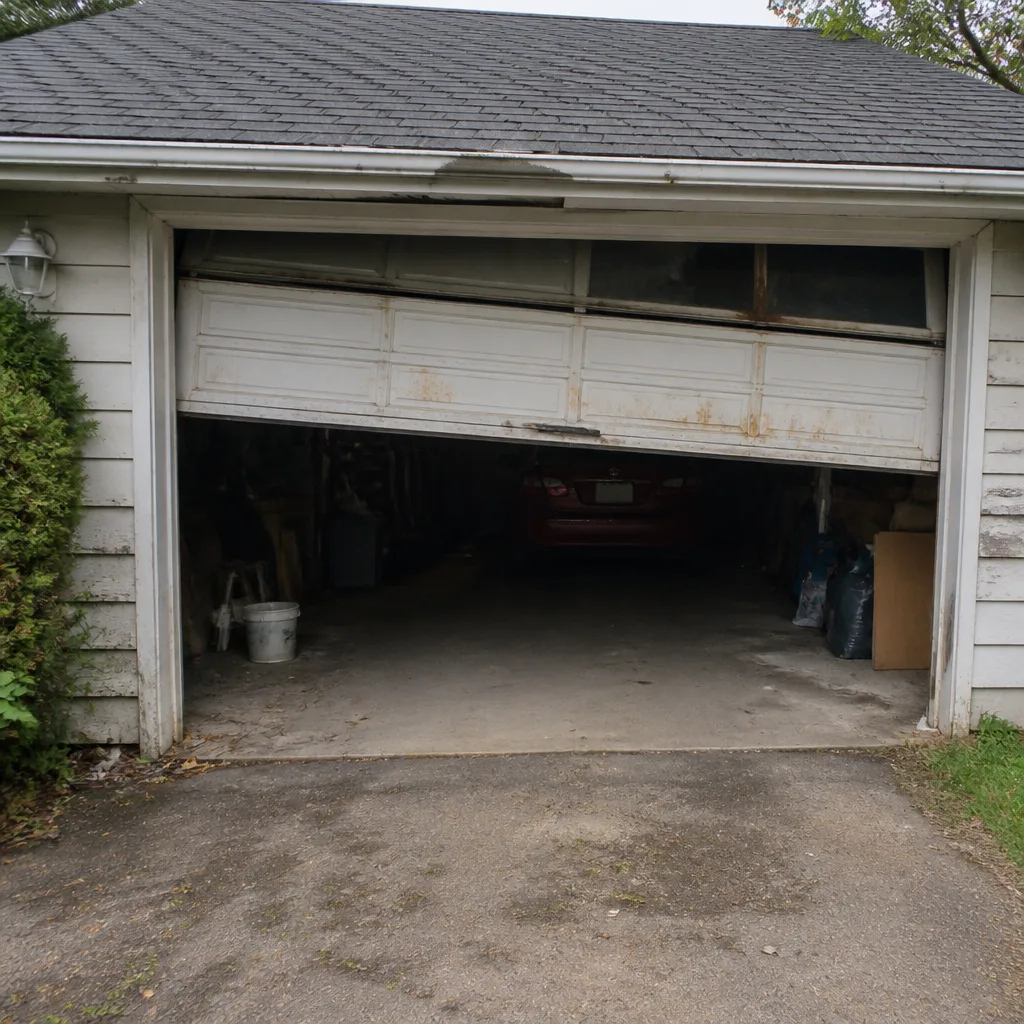
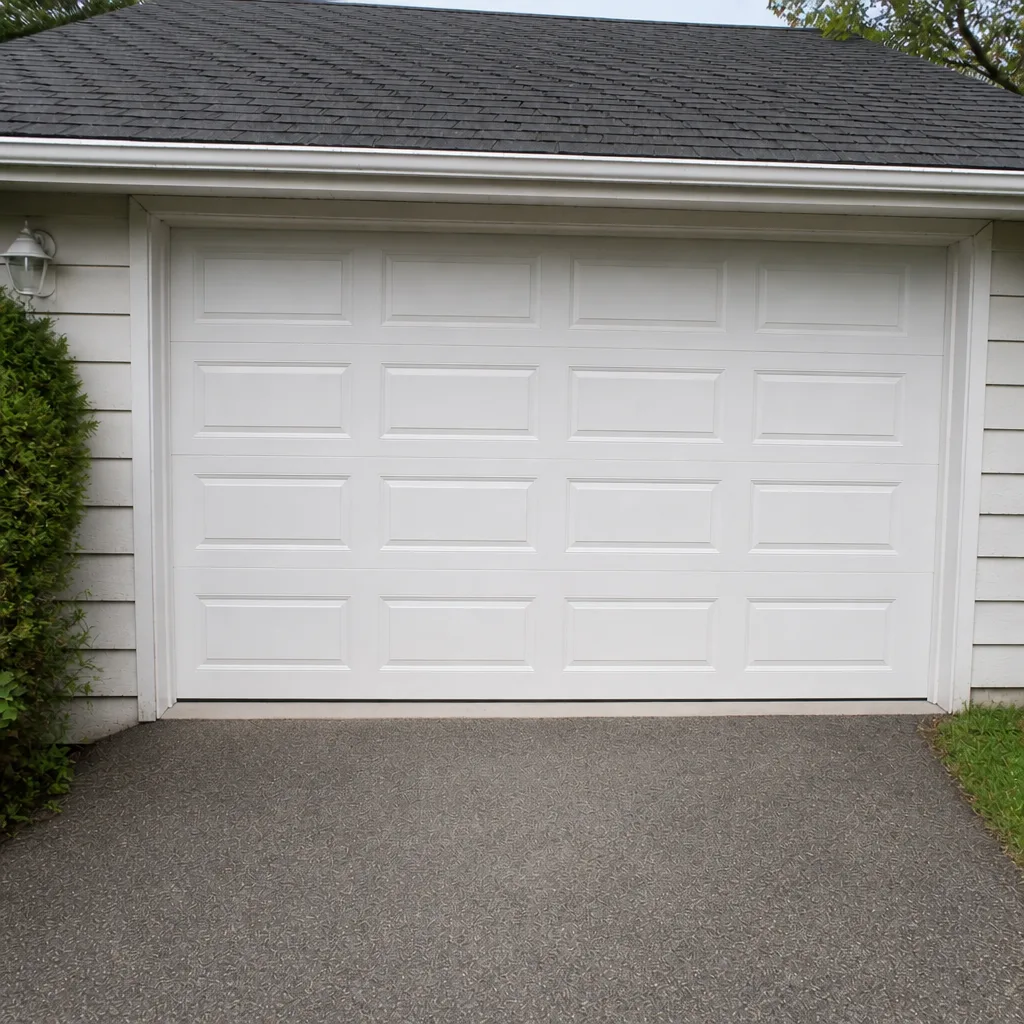
See the difference
 Before
 After
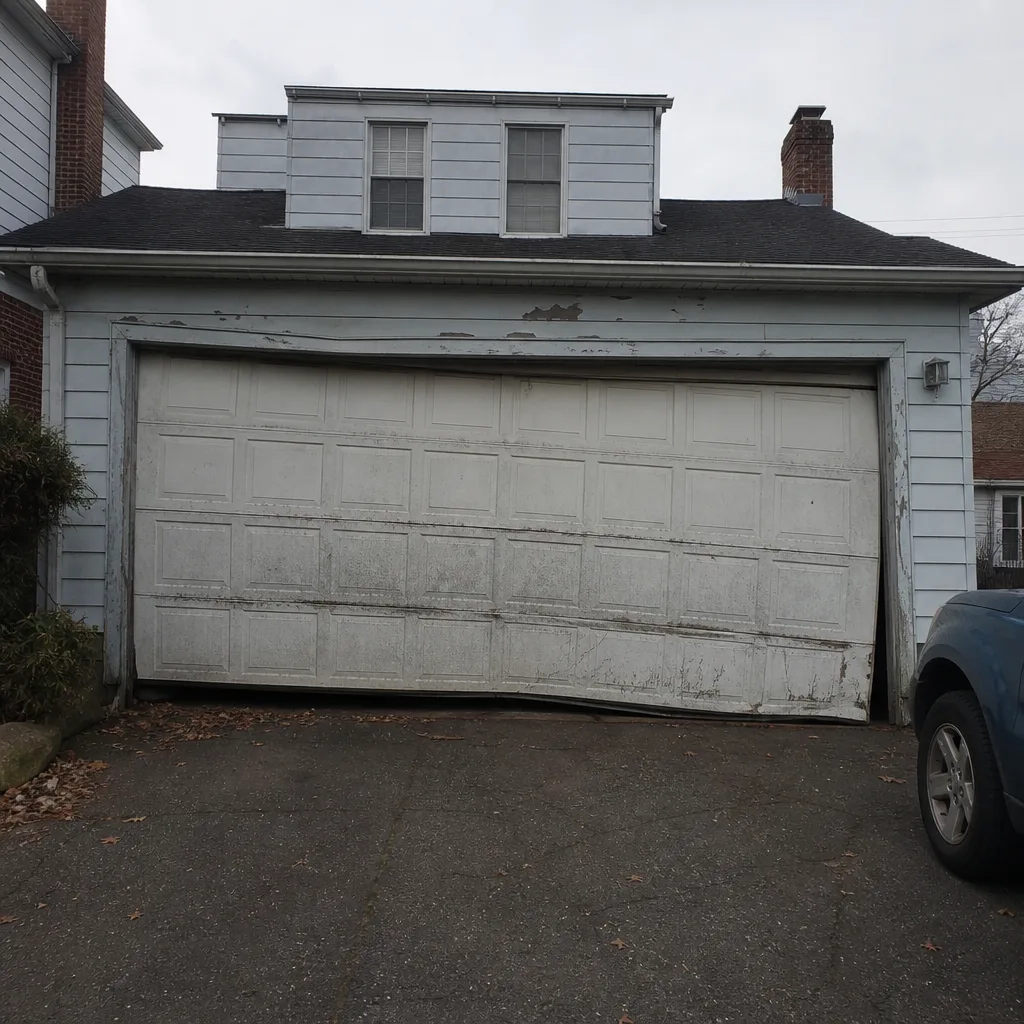 Before
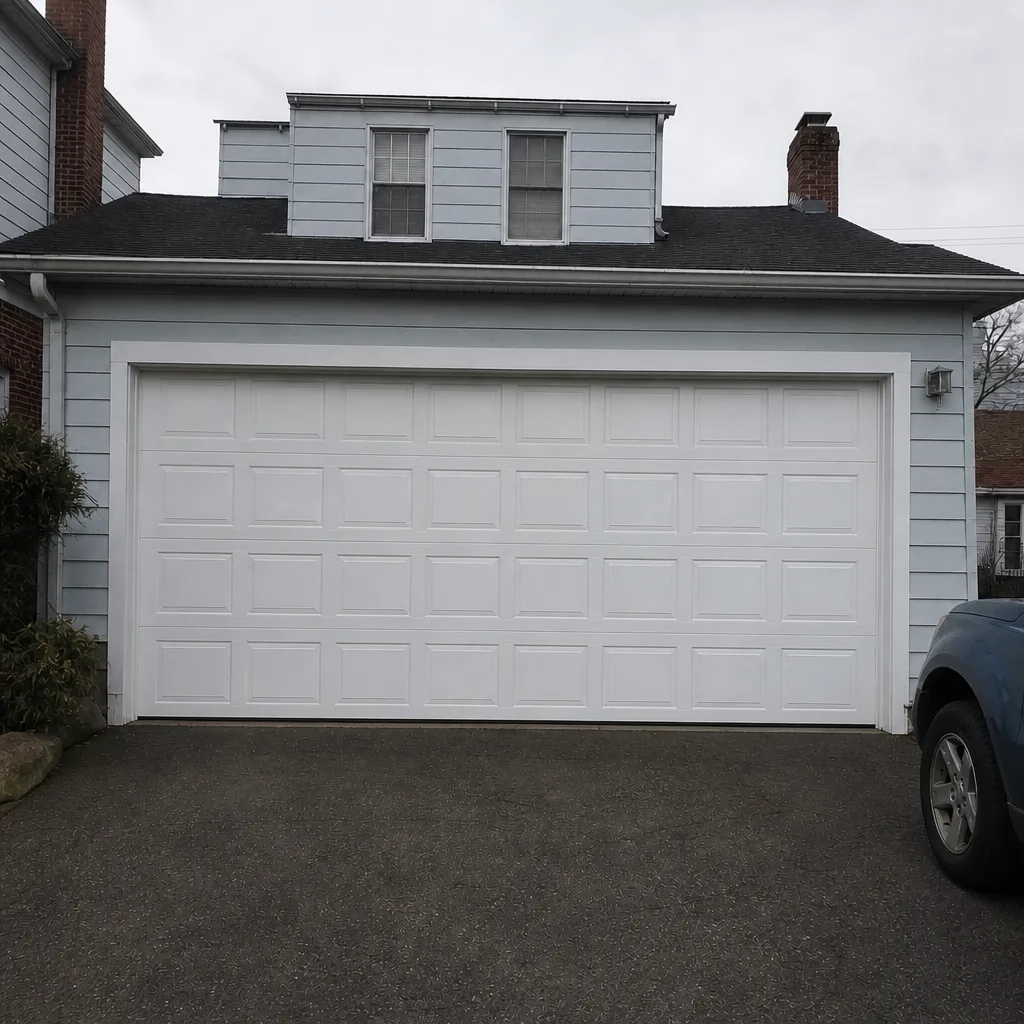 After
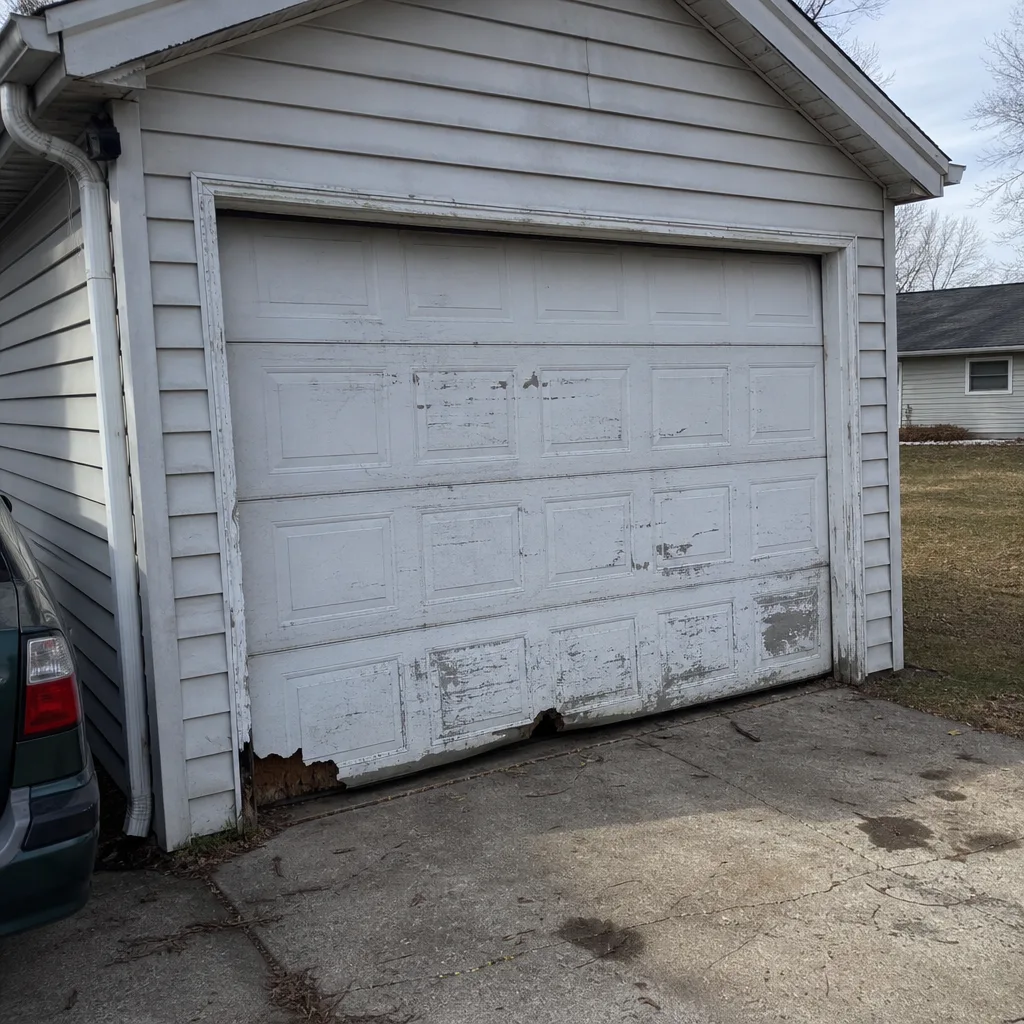 Before
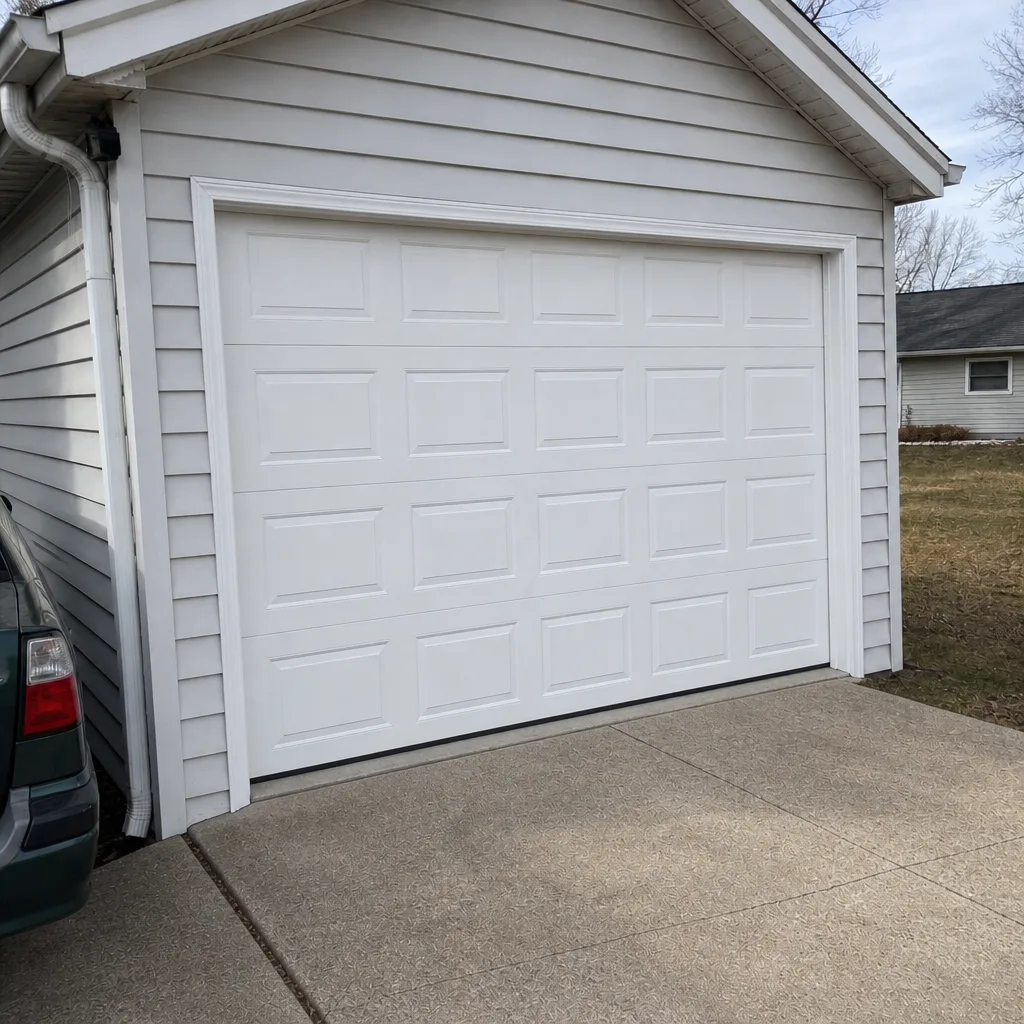 After
When to Call a Professional
Call a technician for anything involving springs, cables, track adjustments, or opener internals. The situations that need fast attention: a snapped spring, a door hanging at an angle, a door that won’t close or won’t open, a photo-eye that won’t stay aligned, or an opener that runs but doesn’t lift the door. When a door won’t close and the house is exposed, that’s an emergency response moment, and it’s the job New Britain Garage Door Repair Co handles beyond scheduled appointments. We work on the brands already in your garage, from LiftMaster and Chamberlain to Genie and Raynor, so there’s no guessing which system you have. Our technicians have up to 14 years of experience, and every price is quoted and agreed before any work starts. New Britain Garage Door Repair Co offers free estimates in New Britain, so call (833) 468-5774 for an exact quote.
Frequently Asked Questions
Run the homeowner-safe items twice a year, in October before the first freeze and in April after the last frost, and test the auto-reverse and photo-eye monthly. The freeze-thaw cycle in New Britain does most of its wear over winter, so the fall and spring checkpoints catch problems before they become repairs.
The bottom seal is the most commonly missed item. It can look intact while stiff or gapped, letting cold air and meltwater reach the bottom panel and rust it from the inside out. Press it with your thumb and look for light under the door from inside the garage.
No. Standard WD-40 is a solvent-based penetrant that strips grease out of sealed rollers and attracts dust, which wears them faster. Use silicone spray or white lithium grease on hinges, rollers, and springs, and leave the tracks clean and dry.
A sharp metallic ping or twang when the door starts or stops usually means the spring is binding and near failure. A dull thud is more often a worn roller. If you hear a single loud bang and the door won’t lift, the spring has broken; don’t run the opener and call for spring repair.
Run the balance test: disconnect the opener and lift the door to waist height, then let go. A door that sinks means the spring is losing tension, and a visible gap in the torsion coil or a door that needs the opener to labor confirms it. Only a technician should replace or tension a spring, because the stored energy can cause serious injury.
No, the written estimate is the price. A technician looks at the door, explains what’s wrong, and quotes a price that’s agreed before any work starts. If something unexpected turns up mid-job, you’re told before the cost changes. Call (833) 468-5774 for a free estimate.
The Bottom Line
A good garage door checklist isn’t about lubricating everything and hoping. It’s about knowing what failure looks like before it happens, and the four items that matter most in New Britain are the bottom seal, the safety tests, the balance test, and proper lubrication with silicone rather than WD-40. Time your checks around October and April and you’ll catch spring fatigue, seal failure, and photo-eye drift while they’re still small fixes. Leave springs, cables, tracks, and opener internals to a technician. When a door can’t wait, that’s the moment to call New Britain Garage Door Repair Co at (833) 468-5774. Estimates are free, and the price is quoted before any work begins. For the full range of what we handle, visit New Britain Garage Door Repair Co.
Written by the team at New Britain Garage Door Repair Co.